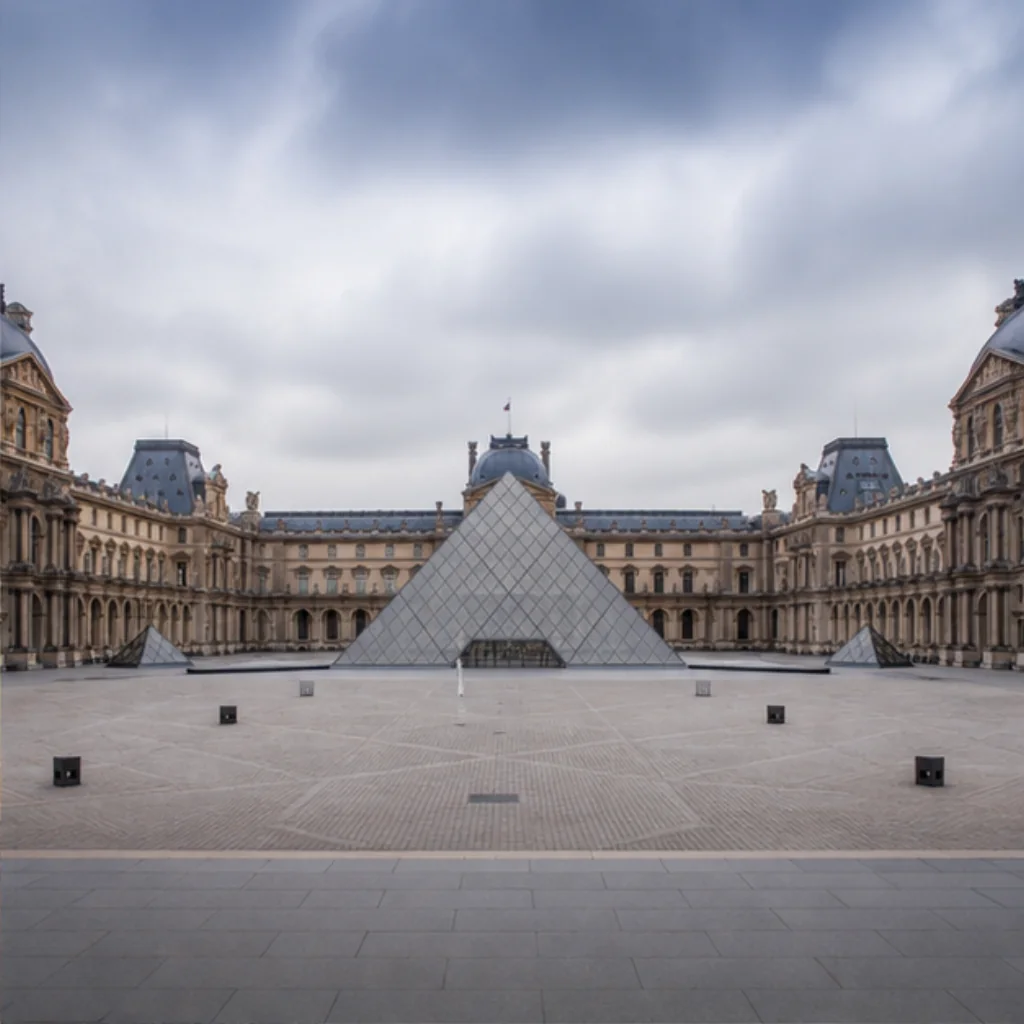
Empty Cour Napoléon
A still courtyard portrait interpretation with the pyramid and palace. The generated empty setting is not a crowd forecast or a reservation.

A visit worth keeping.
Visit and verify your arrival in Unlocked to keep this badge and your visit date in your free Passport. No subscription.
Glass, stone, and a person in the frame: the Louvre courtyard offers several stories before you ever enter a gallery. Make space for the architecture and keep any museum visit as its own part of the day.
Get the app to collectExplore the three photo ExperiencesRead the Louvre Museum photo guide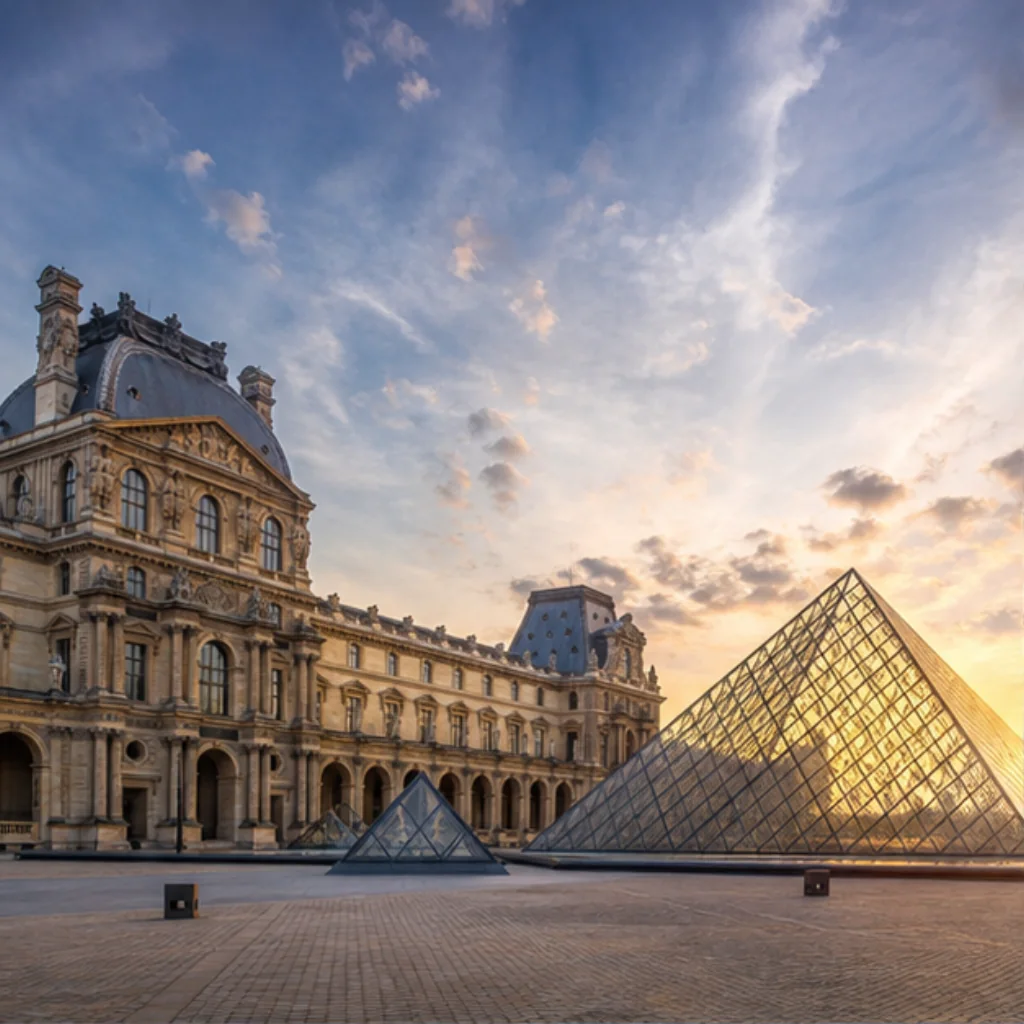
Photo guide
Checked October 14, 2026 against the sources listed here. Hours, access and rules change, so recheck the official source before you go.
Walk around the pyramid to choose its backdrop: from the west side it sits in front of the Sully wing, and from the north or south the long Richelieu or Denon facades run behind it. The museum lists the courtyard as opening well before the galleries, so early morning is the quiet window.
Facing east-southeast you get the pyramid with the Sully wing behind it; turn around and the Tuileries, Place de la Concorde and, about 3.3 km away, the Arc de Triomphe line up along the same axis. The arch stands at the Louvre end of the Tuileries Garden, which has its own seasonal hours.
The enclosed square courtyard east of the pyramid, through the Sully wing, gives you the palace facades on all four sides without the glass. It keeps its own listed hours, longer than the galleries'.
Start with a frame that shows how the pyramid sits against the palace. For a portrait, choose one diagonal or a smaller section of the façade instead of trying to fit every edge into the same photograph.
Check the space around a face and the edges of the glass before taking another frame. A modest change in framing can separate the person from a strong line without climbing onto a ledge or blocking an entrance.
If a museum visit is part of your plans, decide which galleries matter and reserve time for them. Courtyard portraits should fit around that visit rather than use up the attention you wanted to give the art.
Choose a curated Experience after you unlock this Landmark. The previews show creative directions, not customer results. Memories are generated interpretations, not documentary photographs of the scene.
A still courtyard portrait interpretation with the pyramid and palace. The generated empty setting is not a crowd forecast or a reservation.
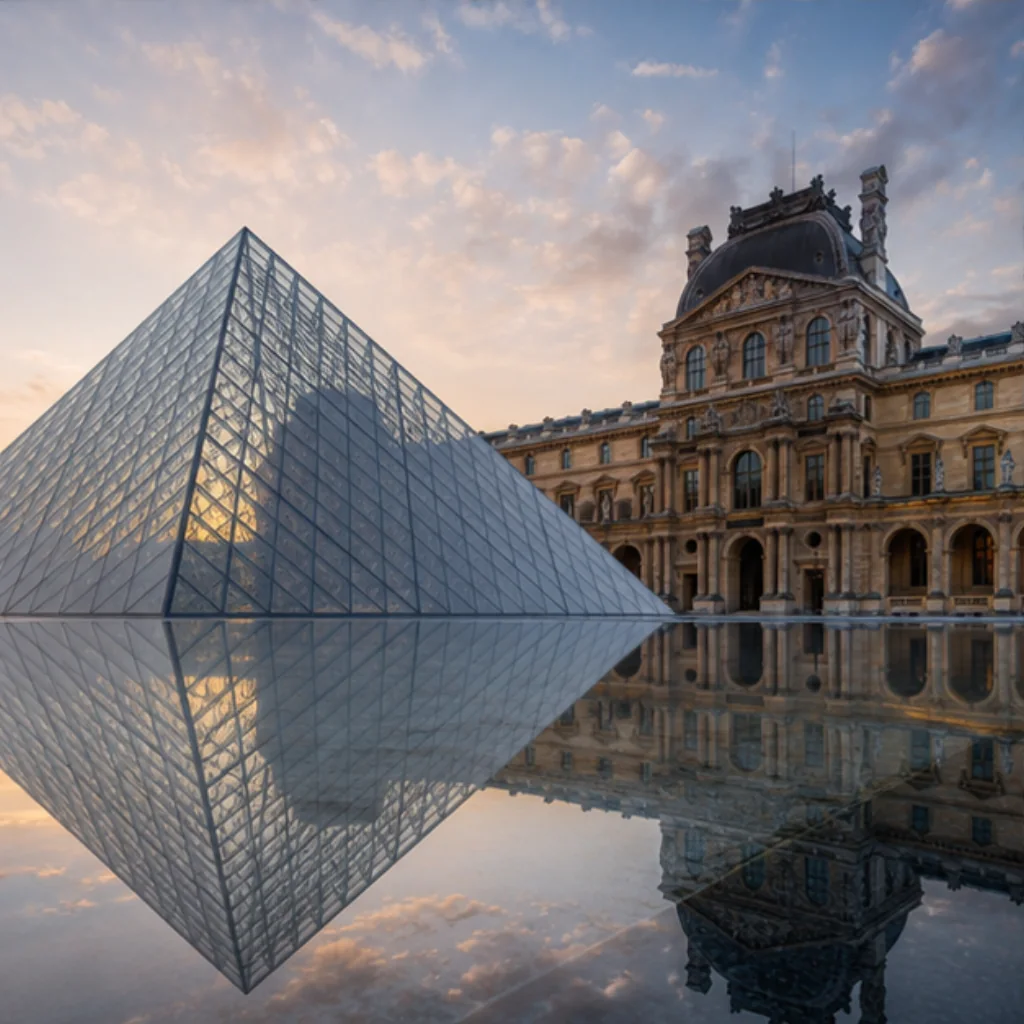
A portrait interpretation shaped by glass, water, and stone. It does not promise the same reflections or access to a particular position during your visit.
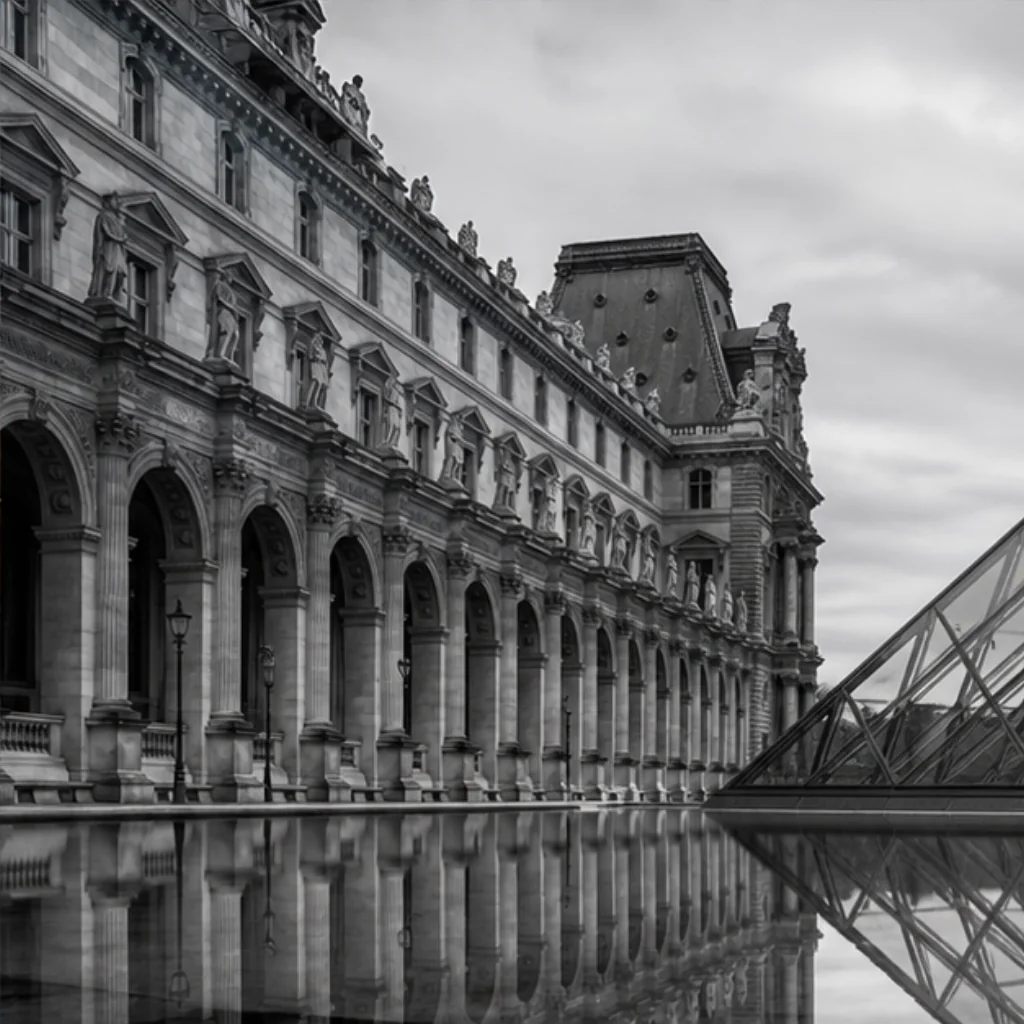
A monochrome treatment of the palace’s scale and geometry. Keep it as a creative Memory alongside the photographs of your actual visit.
Unlocked checks your current location when you choose Unlock. It does not need to track your route in the background. Your reference photos and Memories stay private.
How your photos and location are handledOpen the Landmark in the app while you are in its supported area.
Allow the location check and confirm the Landmark is unlocked before leaving. Your badge and visit date join your free Passport permanently.
Add your reference photos and create a Memory now or later. Your first GPS-verified Landmark unlock grants one welcome credit for your first Memory.
No. It is a generated Experience in Unlocked, not a private-access product. The courtyard remains subject to real visitor conditions and site restrictions.
No. Arrange museum admission separately through the official venue channels. The app verifies presence within the supported Landmark area and creates Memories; it does not grant gallery access.
Yes, if you completed the Landmark unlock in its supported area during your visit. The unlock remains available, so reference-photo selection and Memory creation can happen later.
Check app availability before your trip, then complete your Landmark unlock while you are there.