Paris has a hundred famous viewpoints, but a handful of places carry most of the photos people actually keep. This guide walks through each supported Landmark with the composition advice, timing, and practical notes that make the difference between a snapshot and a photo worth framing.
The famous spots thin out dramatically before ten in the morning and after the day-trippers leave. Golden hour in Paris runs long in summer; the evening light on stone is the city’s best free feature.
02
Decide the portrait before you arrive
A full-Landmark shot and a person-in-frame portrait are different photographs with different distances. Choose which one you are making at each stop so you are not improvising in a crowd.
03
Pair stops that make sense on foot
The Louvre, Pont Alexandre III, and the Arc de Triomphe line up along one axis; Sacré-Cœur pairs naturally with an evening in Montmartre. Plan the day around two or three spots rather than all seven.
The collection
7 photo spots in Paris.
The Paris Landmarks with dedicated guides, each with the composition advice from its full page. Visit in person to unlock its badge in your free Passport.
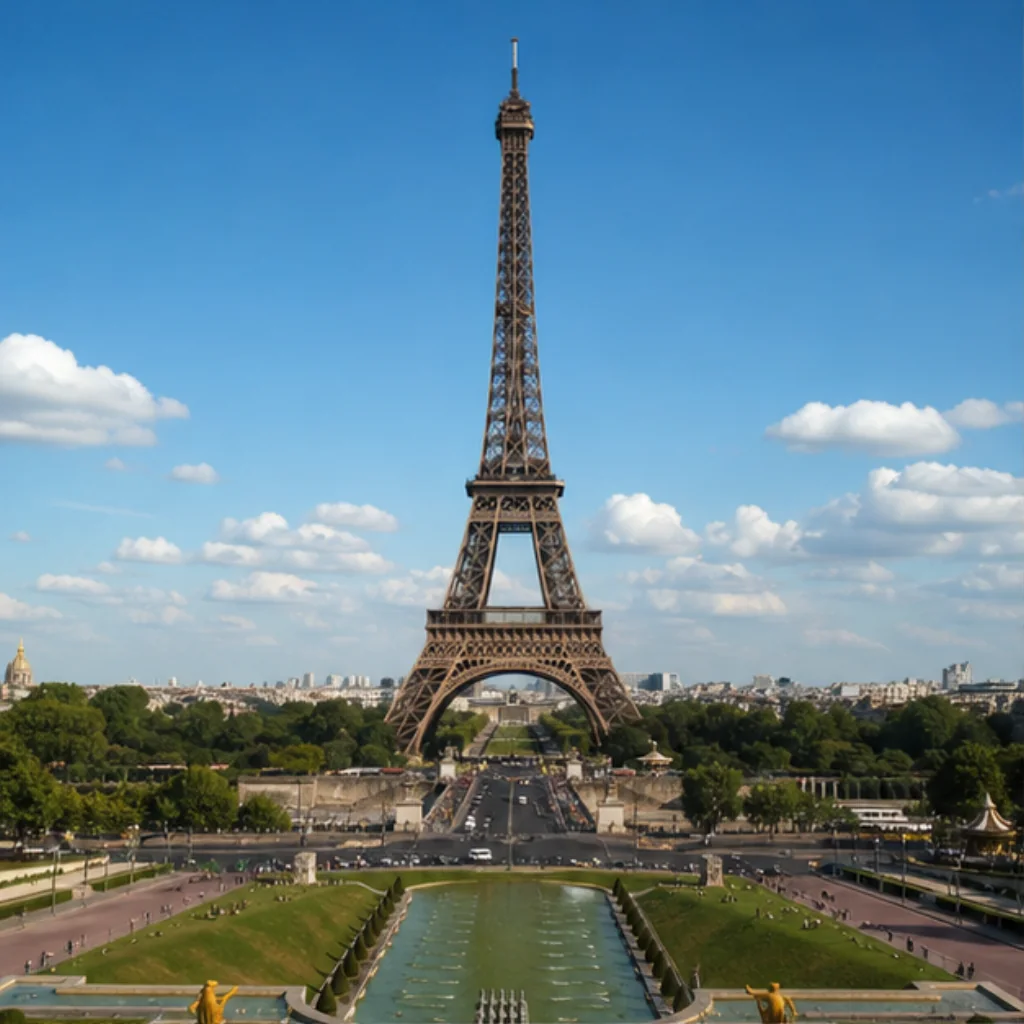
A full view of the tower and a photograph that feels like you are different compositions. Choose the distance that suits each, then discover three creative ways to remember a verified visit.
For a full-tower photograph, leave room around the structure and let the person be a smaller part of the setting. For a portrait, bring them closer and accept that some of the tower may fall outside the frame.
Use a current map and permitted pedestrian positions when choosing between views around the tower. A distant viewpoint can be a good place for a photograph without being inside the app’s supported unlock area.
If you have a tower booking, protect its arrival time and security checks. Take a small set of photos before or after rather than making a long portrait session compete with the visit.
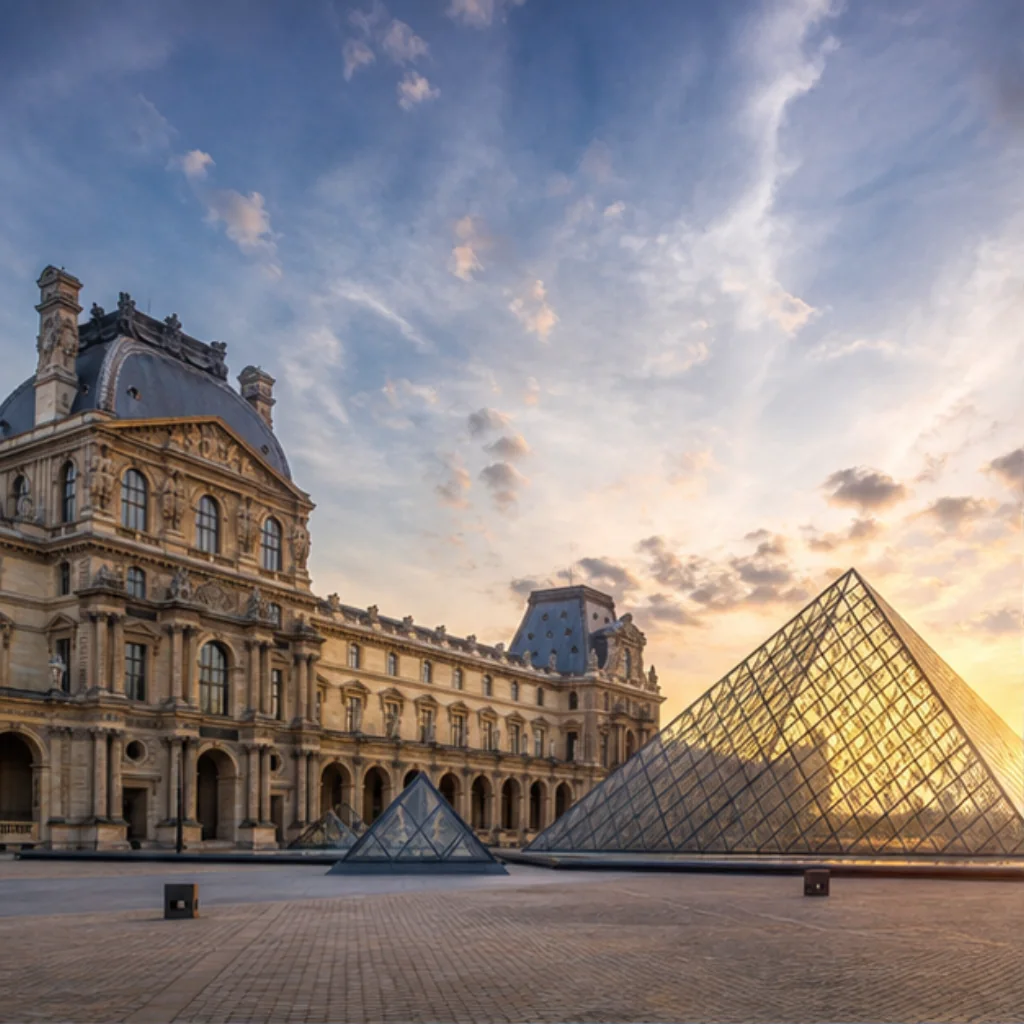
Glass, stone, and a person in the frame: the Louvre courtyard offers several stories before you ever enter a gallery. Make space for the architecture and keep any museum visit as its own part of the day.
Start with a frame that shows how the pyramid sits against the palace. For a portrait, choose one diagonal or a smaller section of the façade instead of trying to fit every edge into the same photograph.
Check the space around a face and the edges of the glass before taking another frame. A modest change in framing can separate the person from a strong line without climbing onto a ledge or blocking an entrance.
If a museum visit is part of your plans, decide which galleries matter and reserve time for them. Courtyard portraits should fit around that visit rather than use up the attention you wanted to give the art.
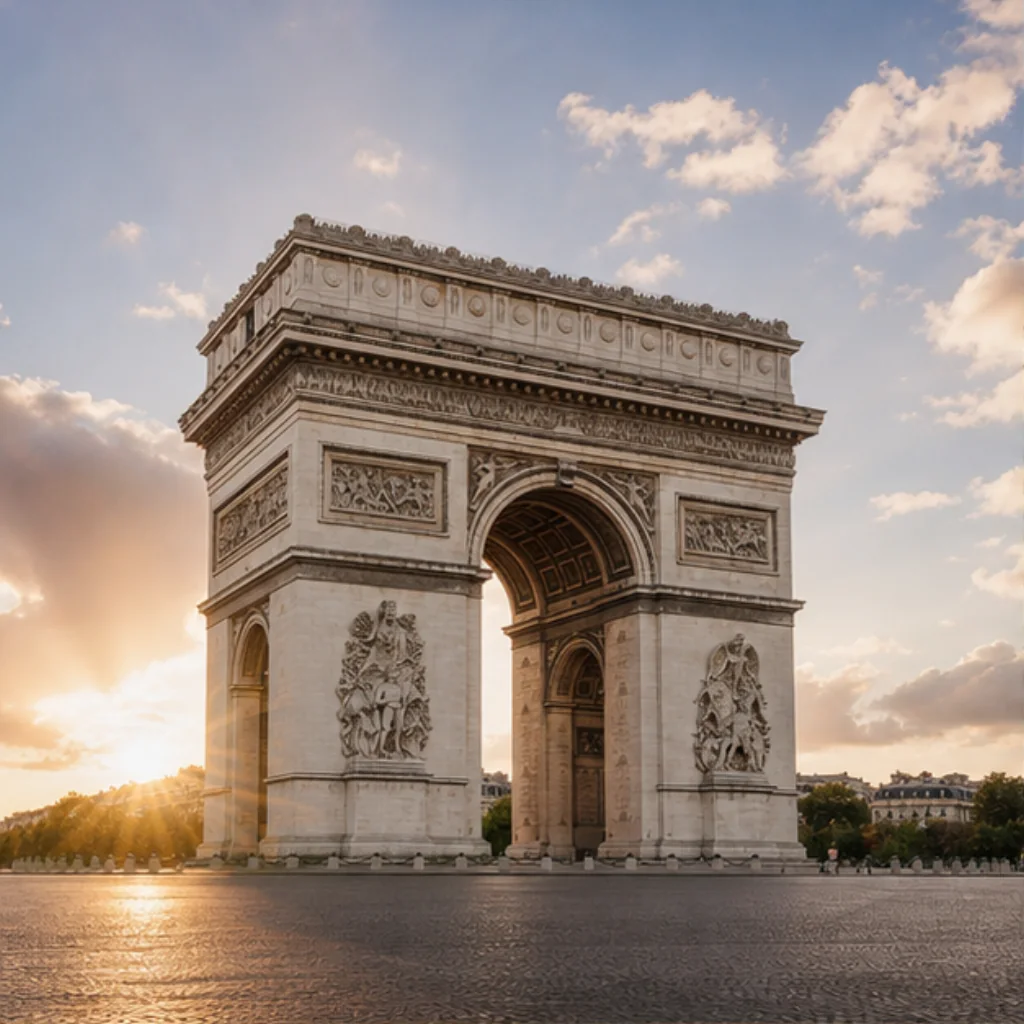
The arch can anchor a city portrait or a quieter moment of remembrance. Give the approach and the memorial their own attention before deciding what to put in the frame.
Use the official pedestrian approach to the monument and check access for your date. A photograph from across an avenue and a visit beneath the arch are separate positions; do not cross the traffic circle to connect them.
For a portrait, keep the arch as a recognizable part of the background without insisting on perfect symmetry. An off-center composition from an appropriate pedestrian position can work without stepping into traffic.
Under the arch, be considerate of the Tomb of the Unknown Soldier and any ceremony or staff direction. Put the phone away when attention to the place is more appropriate than arranging another pose.
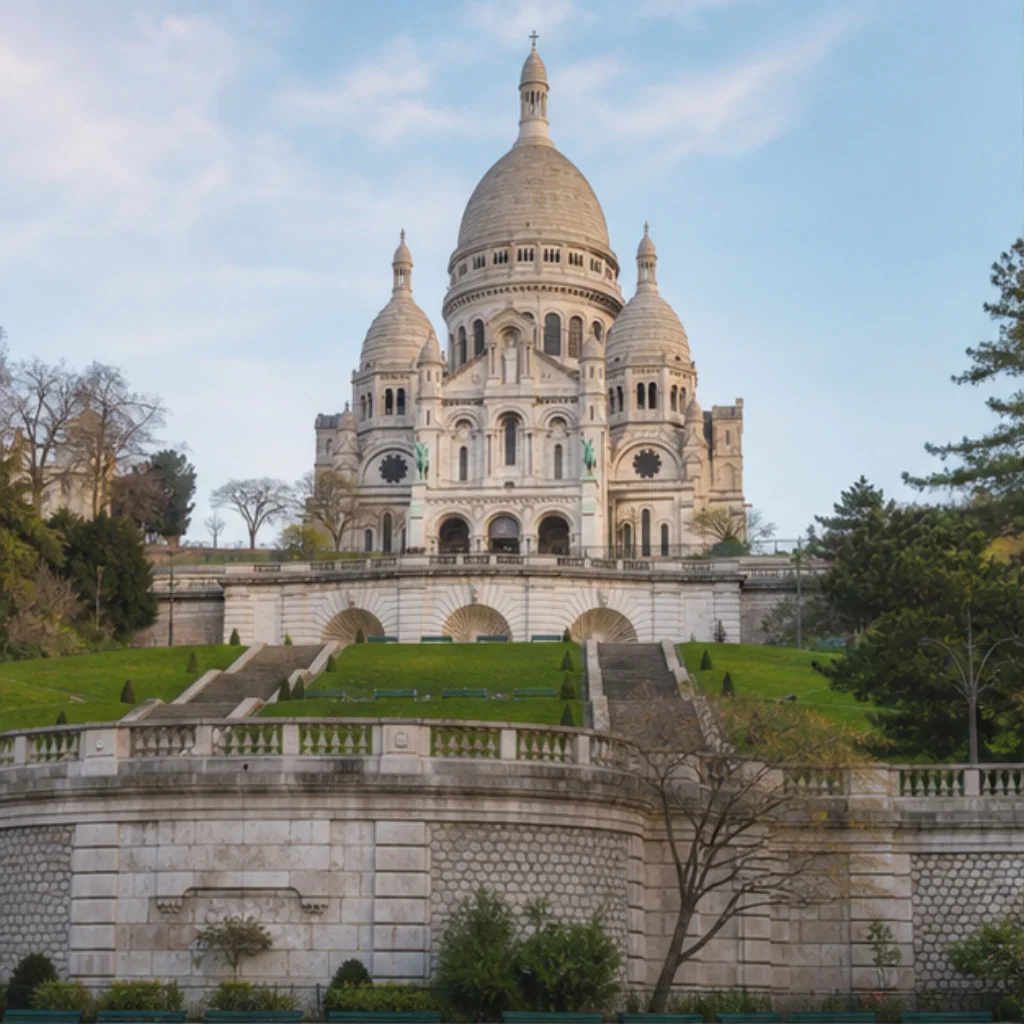
The white basilica watches Paris from the city’s highest hill, and the whole slope below it is part of the photograph: steps, lanes, and rooftops falling away toward the center.
From below, the full sweep of domes and steps needs distance—shoot from the rue de Chevalier de la Barre curve rather than the bottom of the stairs.
The steps are a public living room: keep groups, sitters, and street artists out of your forced perspective, and ask before photographing anyone up close.
Interior visits are welcome but separate: the basilica asks for quiet, no photos inside, and modest dress.
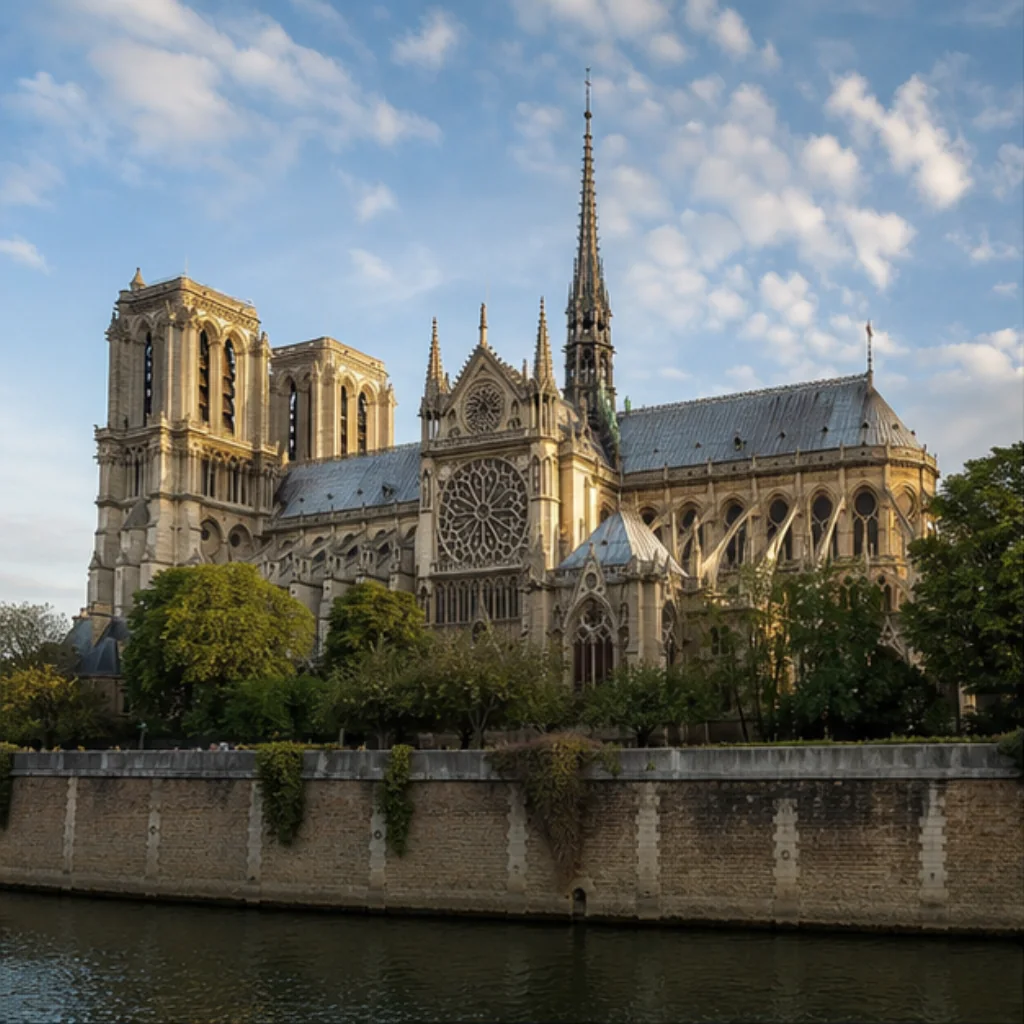
The restored cathedral owns the middle of the river: twin towers from the parvis, flying buttresses from the garden side, and stone warmed by the evening sun from the Left Bank.
The parvis in front gives the classic symmetric towers; the riverside gardens give buttresses, spire, and breathing room—treat them as two different photographs.
Security cordons around the cathedral adjust with events and services. Shoot from permitted ground and never step past a barrier for an app unlock.
Late afternoon sun warms the west facade; morning keeps the Seine-side calm and quiet.
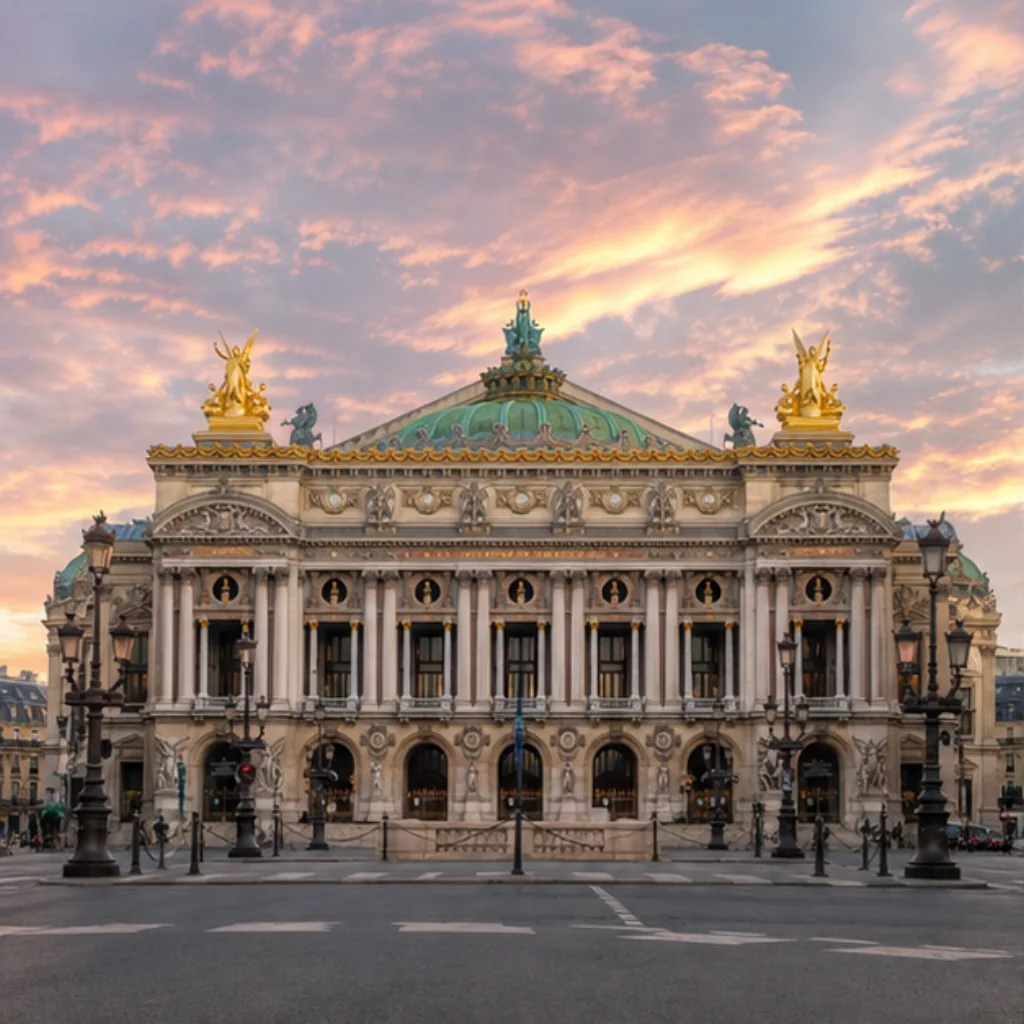
The opera house is Second Empire Paris at full volume: gilt, marble, and a grand staircase built to be seen on—and photographed from.
The avenue de l’Opéra approach gives a clean frontal frame; the boulevard des Capucines corner adds the café crossroads Paris loves.
The forecourt is shared with café terraces and traffic. Keep to the public plaza and mind the bus lanes when stepping back for a wide shot.
The interior—grand staircase, auditorium, Chagall ceiling—is a ticketed self-guided visit on most days, with photography allowed without flash under the opera’s rules.
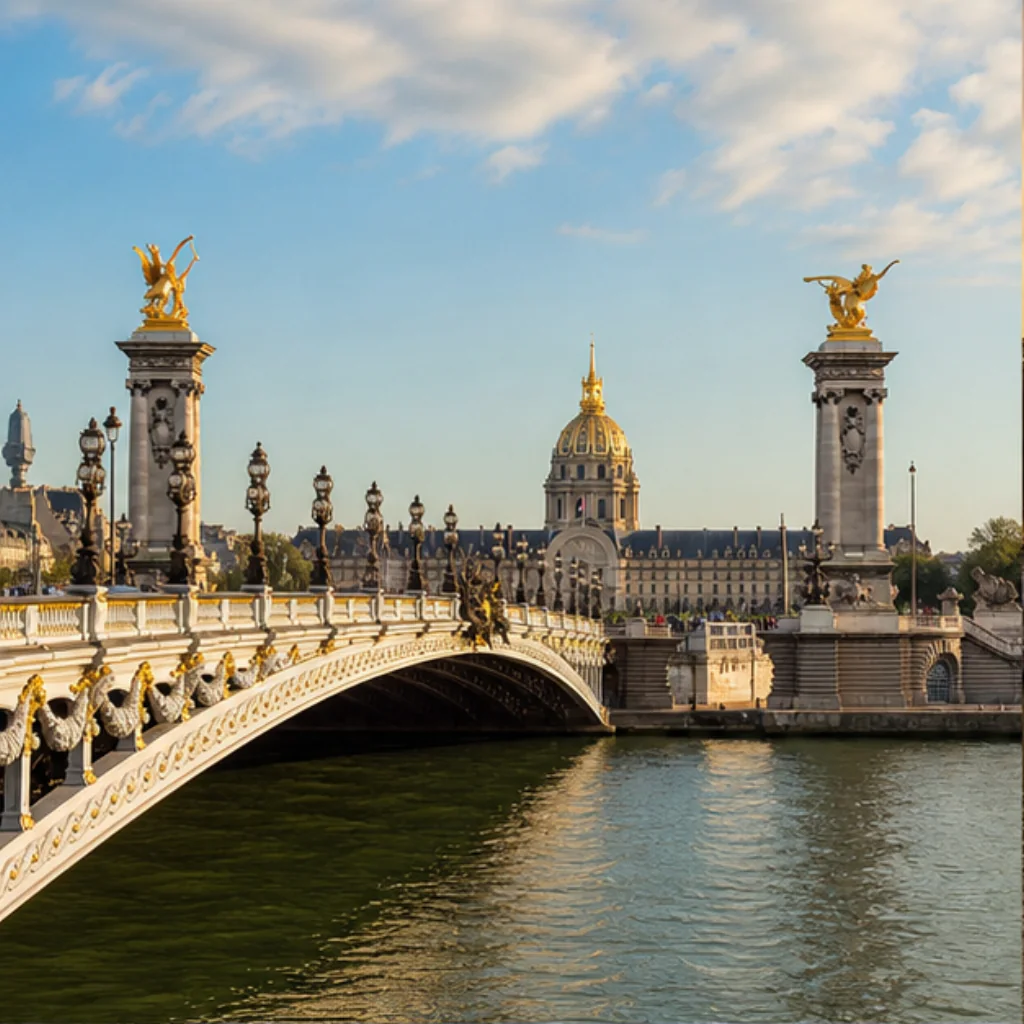
The most decorated bridge in Paris wears lampposts, nymphs, and golden keystones—and frames the Invalides dome on one side, the Grand Palais on the other.
One crossing gives you two signature frames: the Invalides golden dome through the arch, and the Seine traffic with the Grand Palais glass roof behind you.
The bridge carries steady traffic and busy quays below. Stay on the sidewalks, and use the stairways to the riverbank for the under-arch views.
Blue hour is the bridge’s best argument: the lampposts light up against a deep sky while the dome still reads.
Illustrative catalog artwork. The visit is yours to make.
Plan the day
Paris photo spot questions.
Are all of these Paris photo spots free to visit?+
Seeing the Eiffel Tower, the Arc de Triomphe, Sacré-Cœur, Notre-Dame de Paris, and Pont Alexandre III from public ground costs nothing. The Louvre and Palais Garnier are ticketed inside; their exteriors and courtyards are the photo spots most people use. Unlocked’s Landmark unlock is always free and separate from venue admission.
Do I need to photograph every Landmark?+
No, but each one you visit can be unlocked in Unlocked for free, and a verified unlock permanently saves the badge to your Passport. Many travelers spread them across several days or repeat visits.
Can I take these photos if I am traveling alone?+
Yes. Every Landmark page includes composition advice that works without a photographer: use distance, foreground, and timing. Unlocked also offers curated portrait Experiences you can create after a verified visit, so the trip does not depend on whoever is holding the camera.