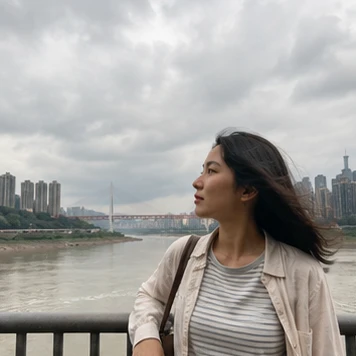
Every Chongqing packing list should include a plan for grey air. The city’s own profile lists “the city of fog” among its names, explaining that because of the mountainous terrain, Chongqing is shrouded in fog many days of the year. A visitor who treats that as bad luck will spend the trip re-booking; a visitor who plans for it gets a different, still worthwhile, version of the city.
This is that plan. It is built from the Unlocked catalog, the city profile, and the same editorial discipline as our other Chongqing guides: no firsthand weather survey, no visibility promises, and no claim that fog improves anything. Fog is a condition to work around, and sometimes in.
What the sources actually establish
Three facts, no more. The city profile attributes the fog nickname to terrain, describes a humid subtropical monsoon climate with very hot summers and mild winters, and notes official efforts that have improved the number of clear-sky days. It does not promise which days will be clear, and neither will we. What follows is decision logic for the days that are not.
Trade far views for near texture
The cost of fog is distance. A confluence seen through haze, a skyline with no skyline, is the version of Chongqing that suffers. The close-range Landmarks barely notice.
Hongyadong’s multilevel, stilt-style architecture, as iChongqing describes it, works at arm’s length: tiled eaves, timber galleries, the line where building meets hillside. Ciqikou’s stone lanes and timber storefronts are a fog-day gift; lanterns and wet stone read better in flat light than in harsh sun. The Huguang Guild Hall’s courtyards give soft, indirect light on clear days anyway, which means grey air costs them almost nothing. The Great Hall’s columns and dome hold a close photograph in any visibility.
What to trade away: the far lookouts, the cross-river skyline shots, and any plan that depends on seeing the confluence’s color division. As our photo guide already advises, do not build a visit around a sharp boundary between the two rivers even in clear weather; in fog, drop the idea entirely.
Fog changes footing, not verification
Two practical notes. First, positioning: the unlock check verifies presence inside each Landmark’s supported arrival area, and visibility is not part of the calculation. A grey day unlocks exactly like a clear one; confirm success before leaving, as always. Second, safety: Chongqing’s stone steps and polished lanes become slick in damp air, and the city’s level changes make footing a bigger factor than in flatter places. Choose shoes for grip, and let the terrain set the pace on the worst days. Access restrictions and closures take precedence over any plan, grey or clear.
Keep a record of the actual day
There is a documentary honesty question hiding in grey-day photography. Your camera photographs of fog, the white river, the dissolving towers, are the true record of the day you had. Keep them.
The Experiences are a different category. River Breeze at Chaotianmen, Skyline Blue Hour, Lantern Evening: their names describe generated creative directions, not the weather at your unlock. Do not read a name as a forecast, and do not present the output as evidence of conditions. Generated Memories are interpretations to be labeled as generated; camera photographs are evidence. The general guide to imperfect photo weather covers the expectations side of this in depth.
The hotpot hour
The city profile names hotpot as the city’s most famous dish, alongside noodles and dry pot. A grey, damp afternoon is the context this food was built for, and building one unhurried hotpot hour into a fog day is the cheapest schedule repair available. We do not recommend specific venues; ask locally, and let the spicy pot do what the skyline could not.
When to reschedule instead
Flexibility is the last lever. If your dates allow, keep the close-texture Landmarks for grey days and hold Chaotianmen and the night views for a clearer evening, since the unlock stays valid whenever you complete it and Memories can be created later regardless. If your dates do not allow, run the grey-day plan without regret: the first-visit grouping guide shows which stops combine, and the after-dark guide explains which night interpretations never required darkness in the first place. In the city of fog, the weather is not a review of your trip. It is a local custom you happened to attend.
Useful details
Frequently asked questions
Is Chongqing's fog the same as smog?
This guide does not make air-quality claims. The city profile attributes the fog nickname to mountainous terrain shrouding the city many days a year, alongside a humid subtropical monsoon climate. Check current conditions and any air-quality advisories separately for your dates.
Will fog block my Landmark unlock?
No. The location check verifies presence inside each Landmark's supported arrival area using positioning, not what you can see. Complete the unlock as usual and confirm success before leaving.
Should I skip the skyline Landmarks on a grey day?
Not necessarily. Chaotianmen's square and riverside space still read in flat light; the far lookouts lose the most. If your visit has flexibility, keep close-texture Landmarks for grey days and save confluence or night-skyline photography for a clearer evening.
Source notes
Sources
This article was prepared with editorial automation using the source pack below.