Sydney evenings have a reputation problem: visitors assume the city closes with the offices, because two of its most famous stops genuinely do. The trick to a good Sydney night is knowing which of the seven Landmarks keep their ground open, which one has a gate, and which one turns into the best free show in the harbour.
This guide sorts the collection by what actually happens after dark. It draws on the Opera House’s Badu Gili page, the Royal Botanic Garden’s visitor information, Vivid Sydney’s official site, and the Unlocked Sydney collection, checked in October 2026. No ferry timetables, lighting schedules, or closing times are promised here; those change, so verify them for your own dates.
The gate and the till: two Landmarks that end with the day
Mrs Macquarie’s Chair is the collection’s one hard stop at night. It sits inside the Royal Botanic Garden, which is free but closes at sunset, with seasonal closing times the garden publishes — earlier in winter, later in summer. There is no evening version of this check. If the chair is on your list, it goes in the day plan; the first-visit guide slots it at the end of the Circular Quay afternoon, exactly while the light still holds.
The Queen Victoria Building is softer but real: entry is free, the dome and the two suspended mechanical clocks are the point, and the building trades to early evening, with a late shopping night midweek and shorter Sunday hours published on its own site. As an evening stop it is a maybe — as a noon stop on a high-UV day it is a certainty, which is the role it plays in the sun-day plan.
The ground that stays public: four evening stops
The other four keep their ground open, and they are not equal after dark.
The Opera House podium and forecourt remain public space in the evening, and the building adds a nightly free event: Badu Gili — ‘water light’ in the Gadigal language — projects contemporary First Nations artists’ work onto the eastern Bennelong sails from sunset, repeating through the evening, best read from the top of the monumental steps. It is unticketed; the nightly session times shift with the seasons and are published per edition on the official page, so check it the day you go. An evening unlock on the podium plus the projections is the strongest free night in this collection.
The Rocks keeps its lanes lit and walkable, and the sandstone terraces under the bridge approaches read differently with the crowds gone — the same Playfair and Argyle Streets that the daylight grouping guide schedules for the morning.
Darling Harbour’s promenade is public around the clock, and the 1902 Pyrmont Bridge carries walkers at night; its swing span, one of the world’s oldest surviving electrically operated ones, swings for vessels on a limited schedule that belongs to daytime weekends, so treat the night version as a quiet crossing rather than a show.
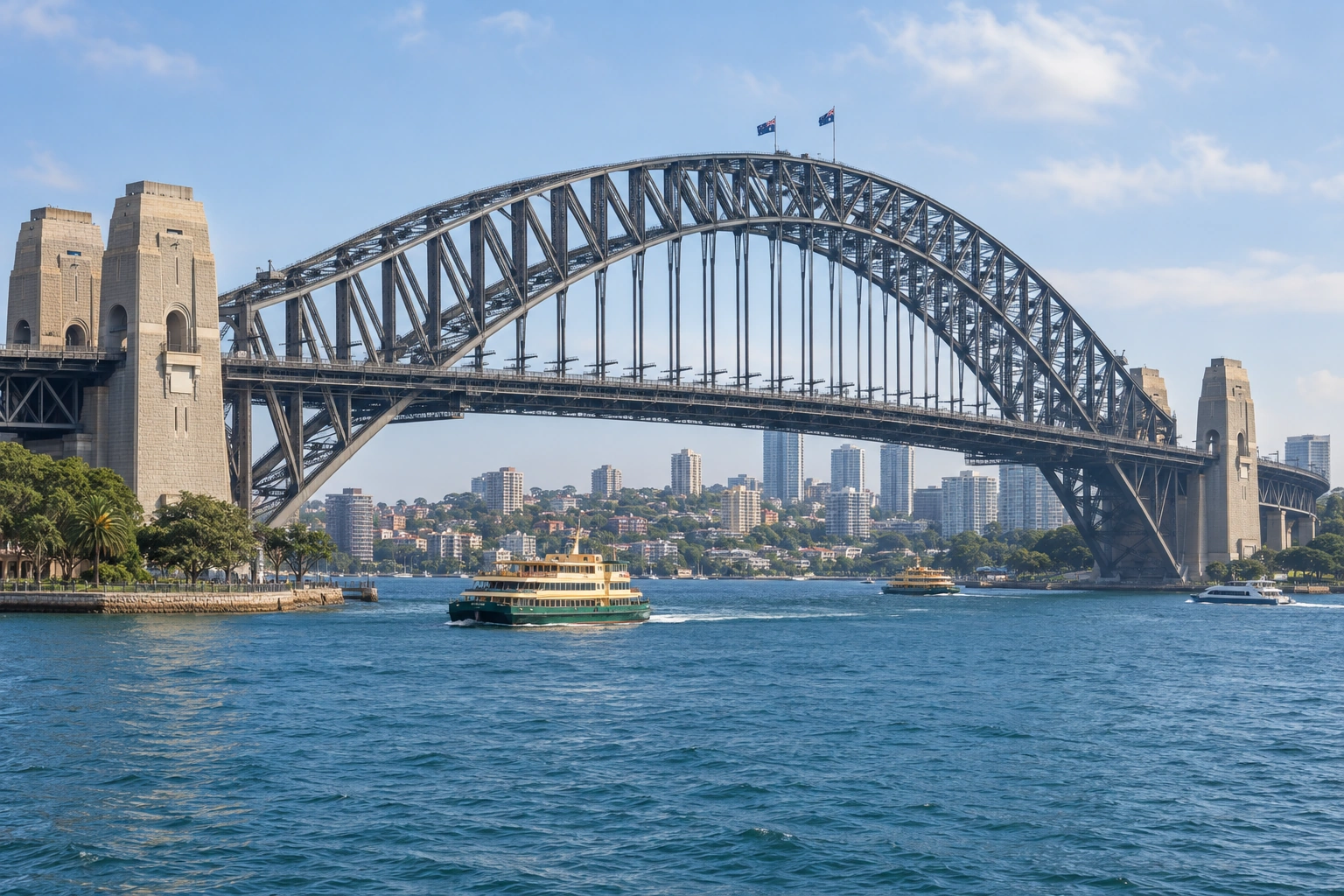
And Bradfield Park is the night-mover: the bridge’s supported area sits under the arch at Milsons Point on the north shore, and after dark the lawn under the steel gives you the lit bridge overhead with the whole skyline across the water. The unlock is the same check by day or night; the view is not. The ferry ride back afterwards is the arguable best harbour transit in the city, with last services varying — verify the timetable for your night.
The festival: Vivid, dated honestly
One annual exception rewrites the whole night map: Vivid Sydney, the light-and-ideas festival, runs in late May to mid June. The 2026 edition ran 22 May to 13 June with lights nightly from early evening, and the official site already lists the 2027 edition as scheduled for 28 May to 19 June. The Light Walk through the city is free, the illuminated Opera House sails are its centrepiece, and the crowds are its price. If your trip lands inside those dates, plan around it; if not, Badu Gili is the nightly, quieter version of the same idea.
What the app asks of an evening
Unlocked verifies presence, and presence does not care what time it is: a check at Bradfield Park at nine at night counts exactly like the same check at noon. What the evening changes is what you can reach — the garden gate, the shopfront hours — and the light on your own photos, not the app’s mechanics.
One honest note on the Experiences: no Sydney Experience name requires darkness. The daylight portraits and the monochrome on-film set are available after any verified unlock at any hour, so an evening unlock buys you the record, not a different picture. That is deliberate — the after-dark mechanics are the same everywhere the app goes.
If you are assembling the full trip, start with the first-visit grouping guide, keep the Opera House visit plan for the free-versus-ticketed split, and check the sun, glare, and southerly plan before you lock in dates — October through March, the sun decides your evenings more than the timetable does.
Useful details
Frequently asked questions
Is there anything free to see at the Opera House at night?
Yes. The podium and forecourt remain public in the evening, and Badu Gili projects contemporary First Nations artists’ work onto the eastern Bennelong sails from sunset, with repeats through the evening. It is free and unticketed; the nightly times shift with the seasons and are published on the Opera House’s own page.
When is Vivid Sydney?
Vivid runs annually in late May to mid June — the 2026 edition ran 22 May to 13 June, and the official site already lists the 2027 edition as scheduled for 28 May to 19 June, with the Light Walk free and most large installations unticketed. Treat the program as something to check closer to the date.
Do any Sydney Experiences require a night unlock?
No. Every Sydney Experience name — the daylight portraits and the monochrome on-film set — is available after any verified unlock at any hour. Nothing in this collection requires darkness, which also means an evening unlock does not buy you a different picture than a morning one.
Source notes
Sources
This article was prepared with editorial automation using the source pack below.
- Sydney Opera House — Badu GiliSydney Opera House
- Vivid SydneyDestination NSW
- Royal Botanic Garden Sydney visitor informationBotanic Gardens of Sydney
- Sydney Landmarks and ExperiencesUnlocked