Marrakech is a color study: red clay walls, Majorelle blue, lantern light, and the old square at blue hour. This guide covers each supported Landmark with composition advice and the practical details — tickets, timing, medina navigation — that make the photos come together.
The souks, the square, and the palaces sit within the old city; Jardin Majorelle and the Menara Gardens are separate trips. Do not chain them into one day — each deserves its own light.
02
Book Majorelle, wing the rest
Jardin Majorelle sells timed tickets that sell out; book ahead. The medina landmarks you can wander into as the day unfolds.
03
Save an evening for the square
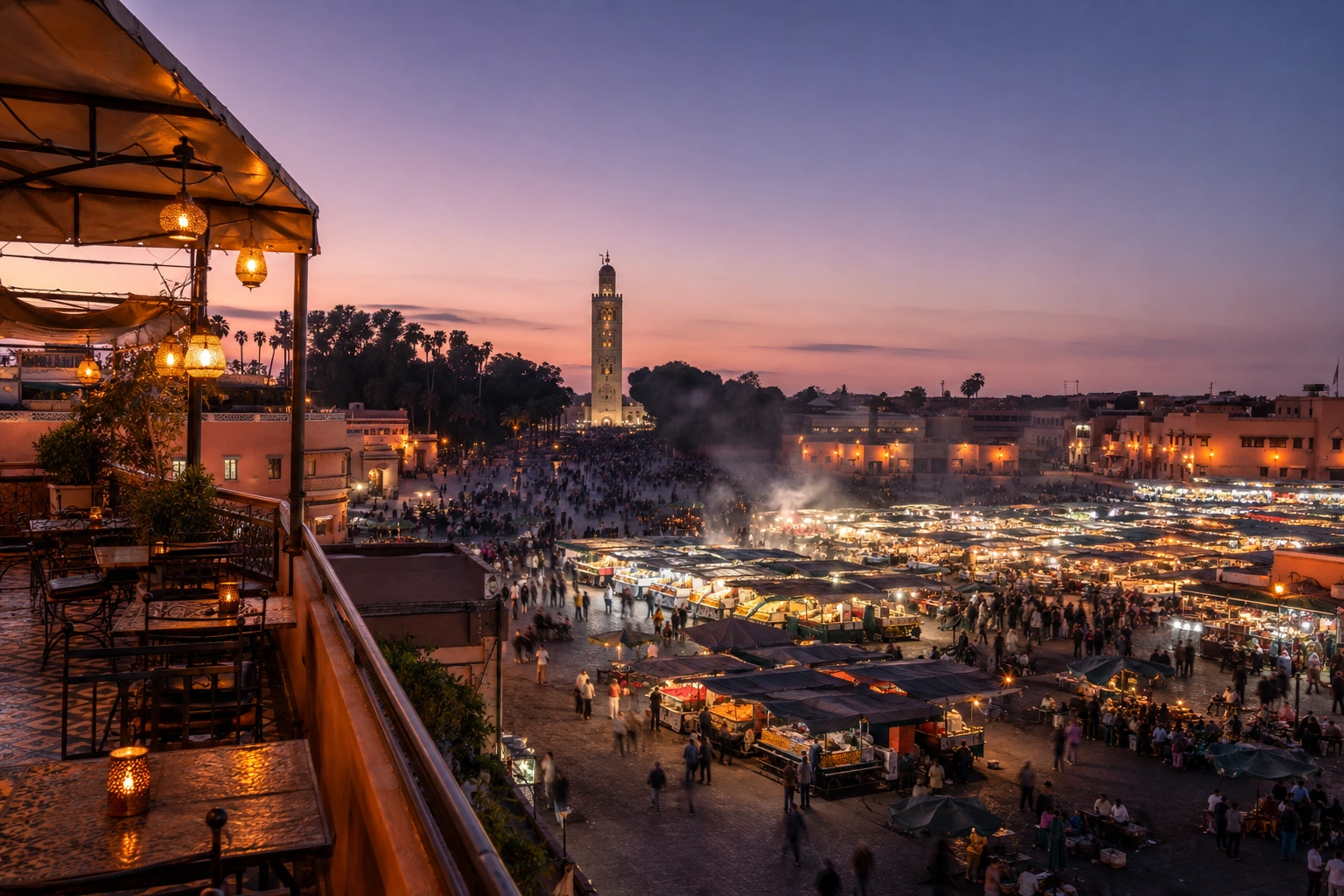
Jemaa el-Fnaa is a daytime market that becomes a nightly performance. Arrive before sunset, claim a rooftop café, and shoot the blue hour with the smoke and lights below.
The collection
7 photo spots in Marrakech.
The Marrakech Landmarks with dedicated guides, each with the composition advice from its full page. Visit in person to unlock its badge in your free Passport.
Start with the square’s open space, then make a closer portrait along its edge. The stalls and roofline can establish Marrakech without making strangers the subject of your photograph.
Take a wider scene first, leaving room for the low roofline. Move closer for the portrait so a face does not disappear into the activity behind it.
Ask before photographing a vendor or performer. Keep pedestrian routes clear and choose a position where you can pause without obstructing anyone.
Confirm your unlock in the square before leaving. A distant rooftop view can make a good photograph without falling inside the supported arrival area.
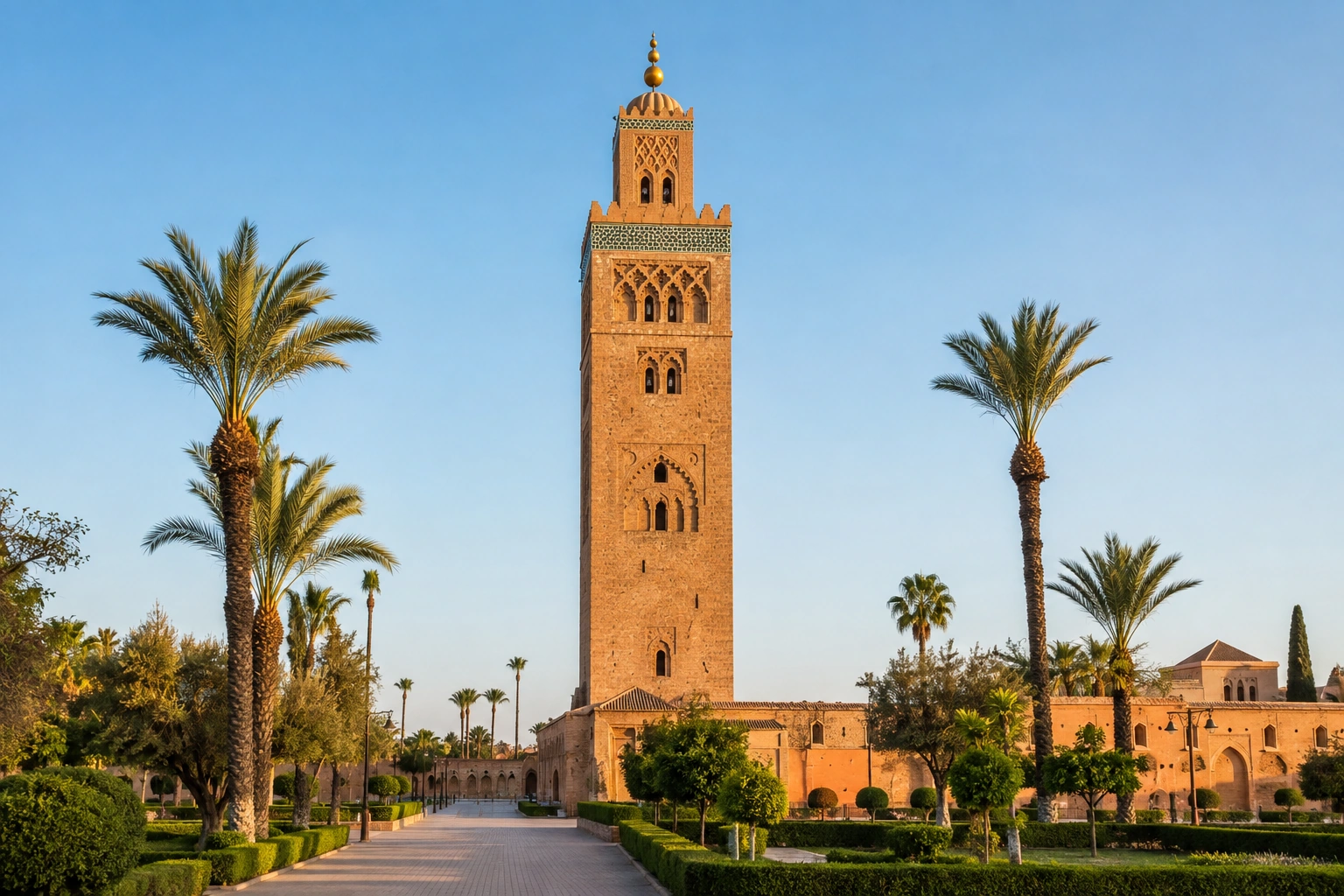
The minaret supplies the vertical line; the garden gives you space to stand back. A portrait from an exterior path can hold both without tilting the camera sharply upward.
Start from a permitted garden path and leave space above the tower. Use a level camera and a little distance to keep its sides from leaning.
Position the person away from the tower’s centreline so the minaret does not appear to grow out of their head.
Use open shade for a closer portrait while retaining a piece of the garden. The supported arrival area is around the landmark, with no need to enter the mosque.
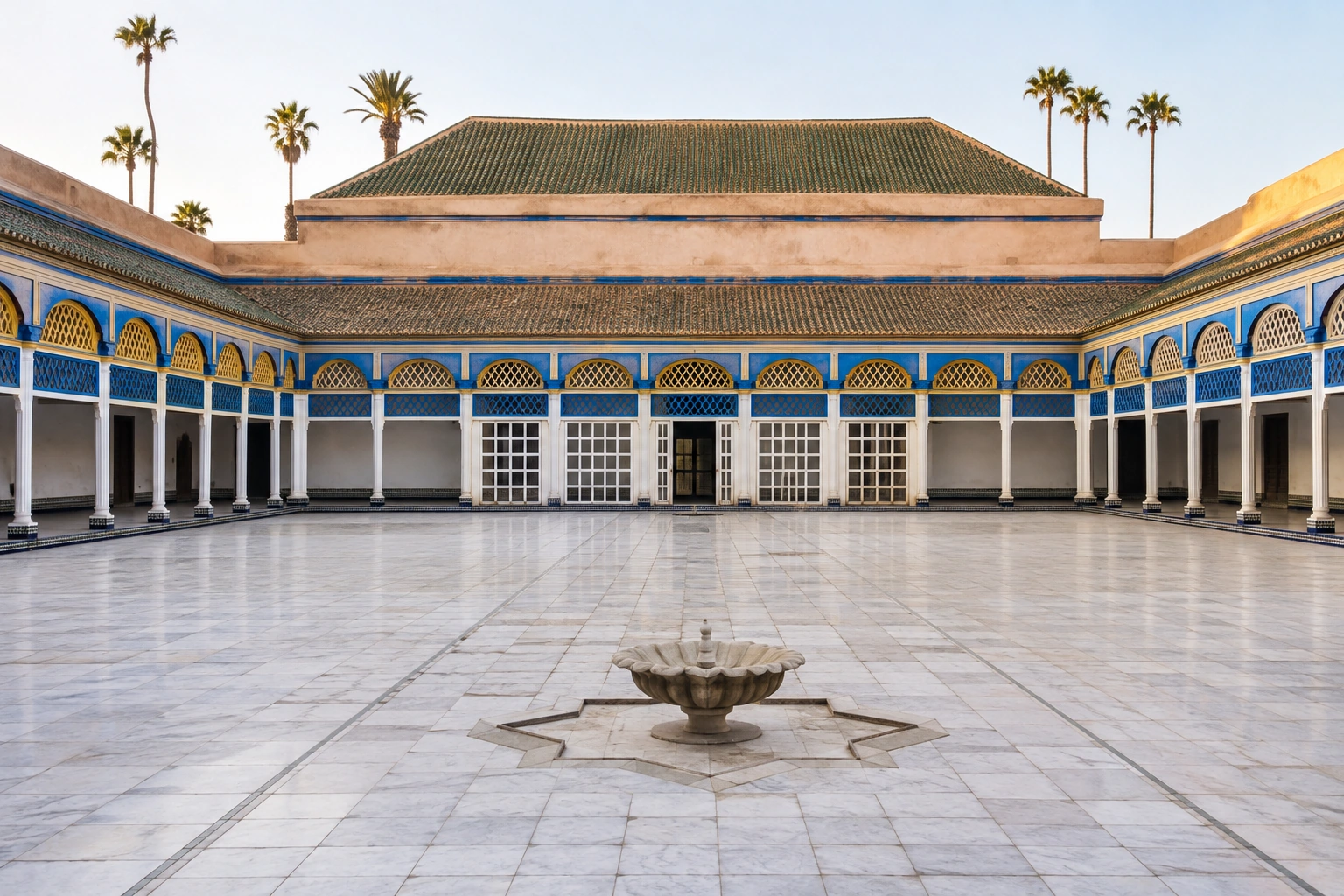
Bahia rewards a change of scale. Photograph the courtyard to show its geometry, then let a single doorway or painted eave frame the person instead of trying to include every surface.
Make the broad courtyard photograph from a permitted edge, keeping vertical columns straight. For a portrait, choose one arcade as the background.
Step into open shade where visitor access allows it. It is easier to retain detail in a face and the painted wood than when both sit in harsh sun.
Keep fountains, tiled surfaces and thresholds clear. Confirm your unlock before leaving the supported area; each palace in the collection has its own arrival check.
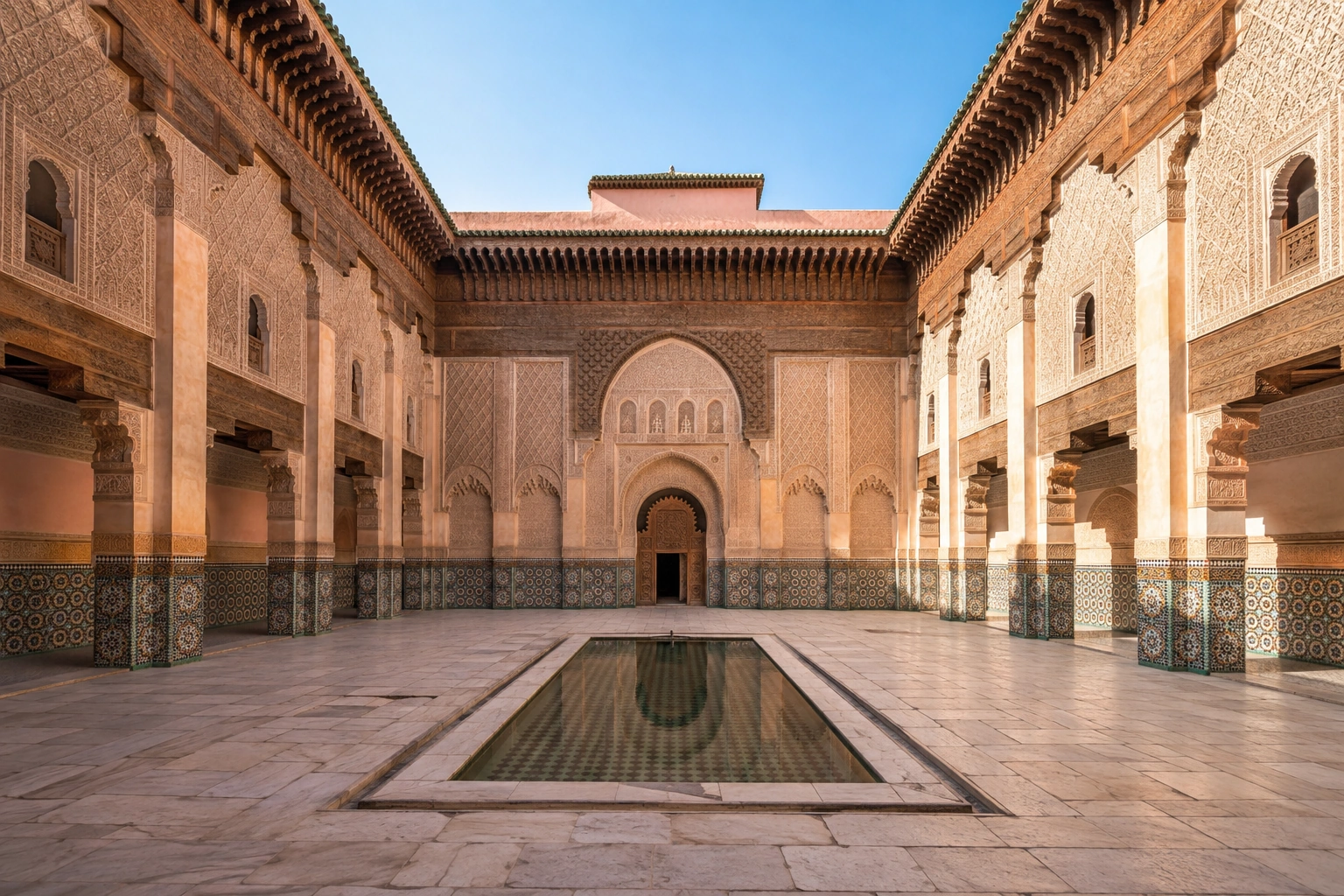
The narrow basin draws a line through the courtyard, while the ornament rewards a closer look. Keep those as two separate photographs so a person remains visible among the details.
For a wider view, use the basin’s long edge to guide the composition. Remain on the visitor walkway and leave room for other people to pass.
Choose one band of tilework or a carved doorway for the portrait. A simpler background makes a face easier to read.
Avoid leaning on decorated surfaces or stepping onto the basin edge. Verify the Madrasa in the app; the neighbouring mosque is a different site.
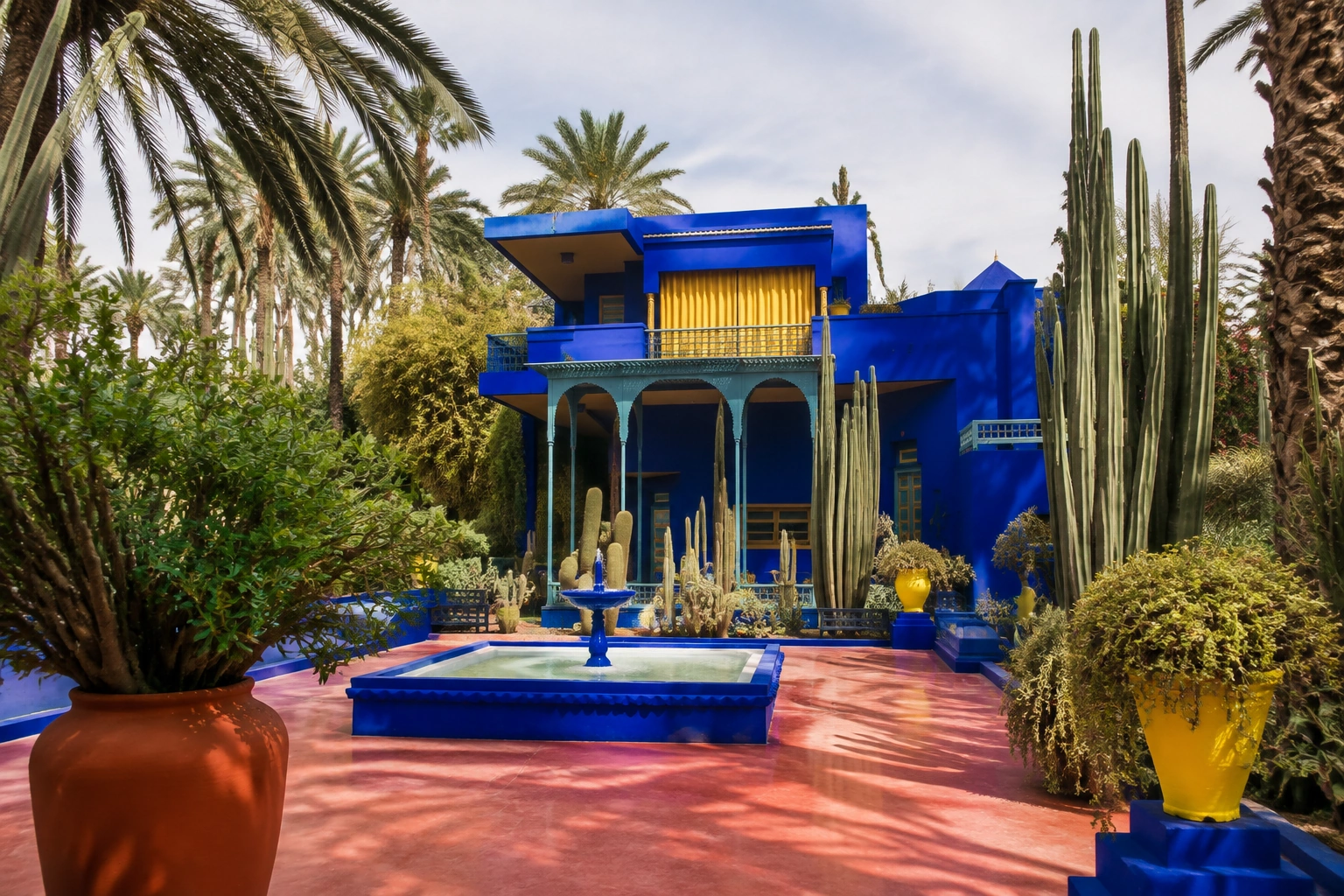
Blue walls and sculptural planting already give Majorelle a strong palette. Choose a small part of it for the portrait, then use a separate wider image to remember the garden path.
Choose a permitted path with a clear background. One patch of cobalt wall and a few plants often read more clearly than every pot in the frame.
Use the shade for portraits and keep the path clear. Avoid stepping into planted beds to find a different angle.
Check official ticket arrangements before your visit. Verify your unlock while inside the supported arrival area rather than assuming a photograph at another nearby museum counts.
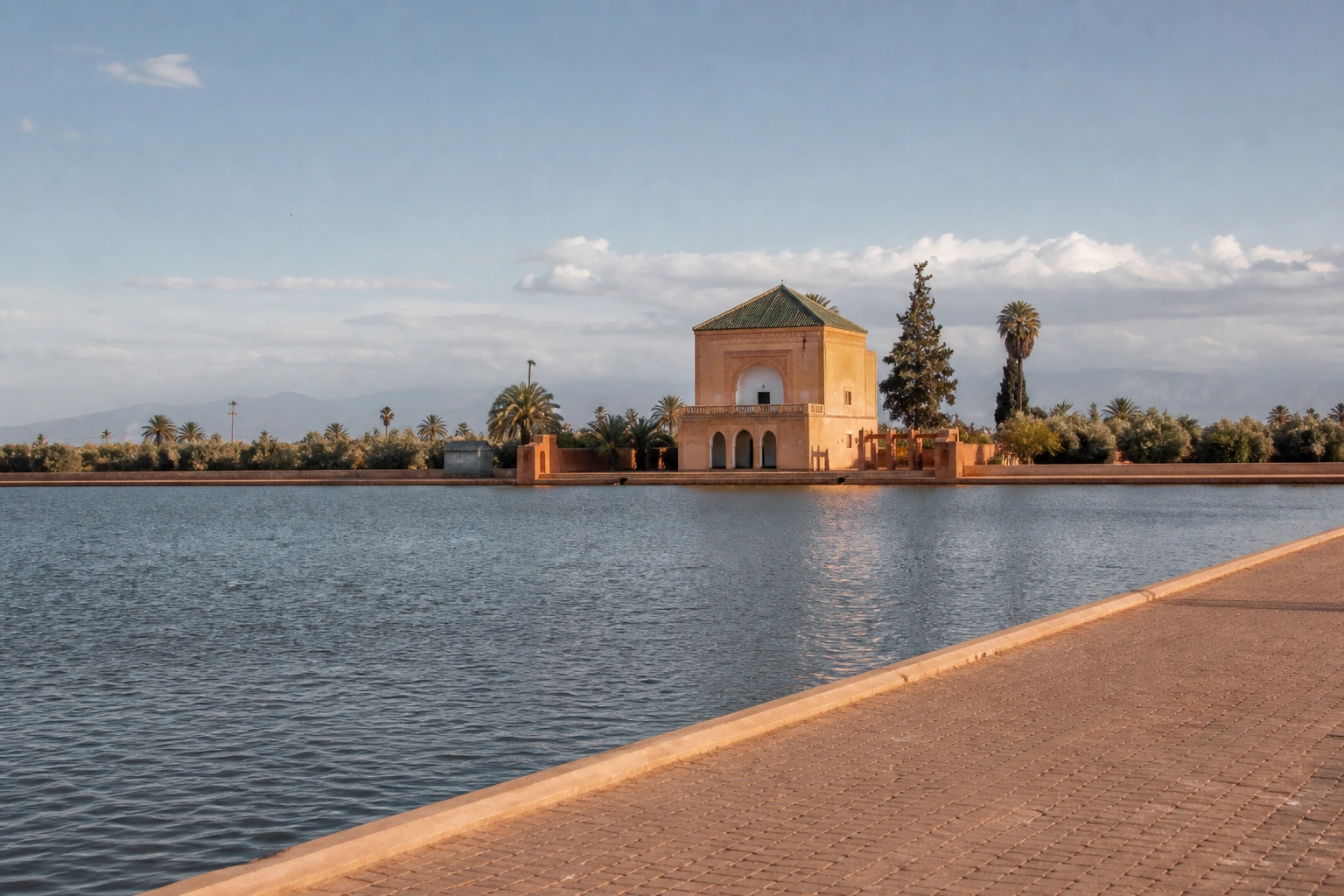
At Menara, the water creates the space between you and the pavilion. Keep enough of it in the scene photograph to explain that distance, then make a closer portrait from a permitted path.
Use the basin edge as a leading line while standing safely back on the path. Keep the pavilion’s green roof distinct against the sky.
Choose a portrait position where the face stays readable and the water provides a simple background. Never enter the basin for a reflection photograph.
Check the actual path and access on arrival. Visibility toward the Atlas Mountains varies; the pavilion and olive trees can anchor the image even when the distant view is hazy.
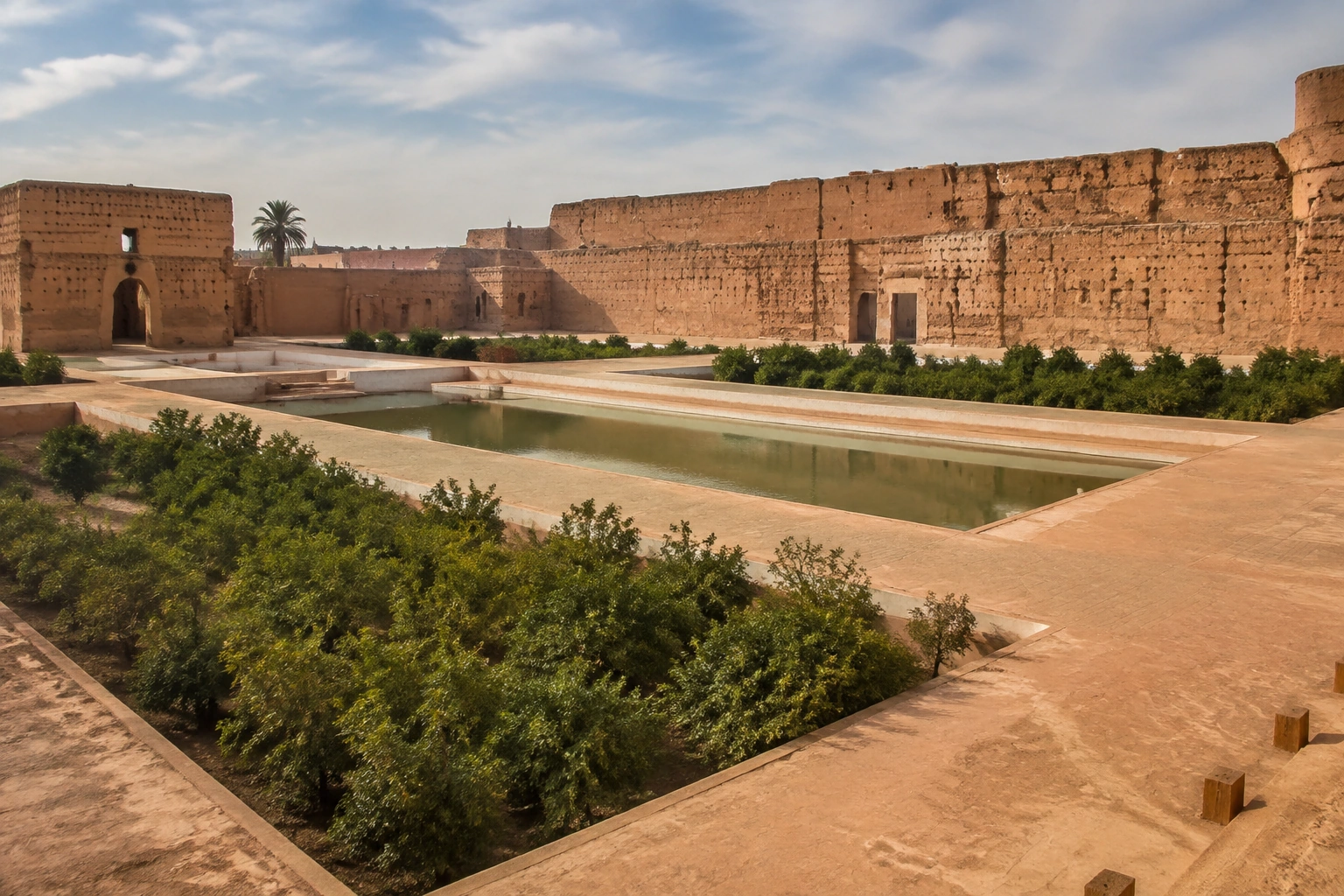
El Badi’s open sky and surviving walls tell a different story from Bahia’s decorated rooms. Use the empty space to show the scale of the ruins, then make a portrait where one wall gives the frame a clear edge.
Make a wide photograph that includes the lowered garden beds and surviving walls. Do not frame the site as if its lost roofs and halls were still standing.
For a portrait, use a permitted walkway beside an ochre wall. Keep sunken areas and water features outside your standing position.
Follow the signed visitor route, including any terrace restrictions. Bahia Palace is a separate Landmark and requires a separate visit check.
Illustrative catalog artwork. The visit is yours to make.
Plan the day
Marrakech photo spot questions.
Are all of these Marrakech photo spots free to visit?+
Jemaa el-Fnaa and the Koutoubia exterior are free, and rooftop views over the square cost the price of a mint tea. The palaces, the madrasa, and the gardens charge modest admissions. Unlocked’s Landmark unlock is always free and separate from venue admission.
What is the best time of day for Marrakech photos?+
Two windows: early morning, when the medina is quiet and the light is clean, and blue hour at Jemaa el-Fnaa, when the lanterns and the crowd arrive together. Midday belongs indoors or in the gardens.
How do I photograph in the souks politely?+
Ask before photographing people and stalls — a purchase or a friendly word goes a long way. The architecture, lanterns, and goods are fair game, and the portraits you ask for will be the best ones anyway.
Turn the photo into a keepsake
Collect the badge. Keep Marrakech in your Passport.