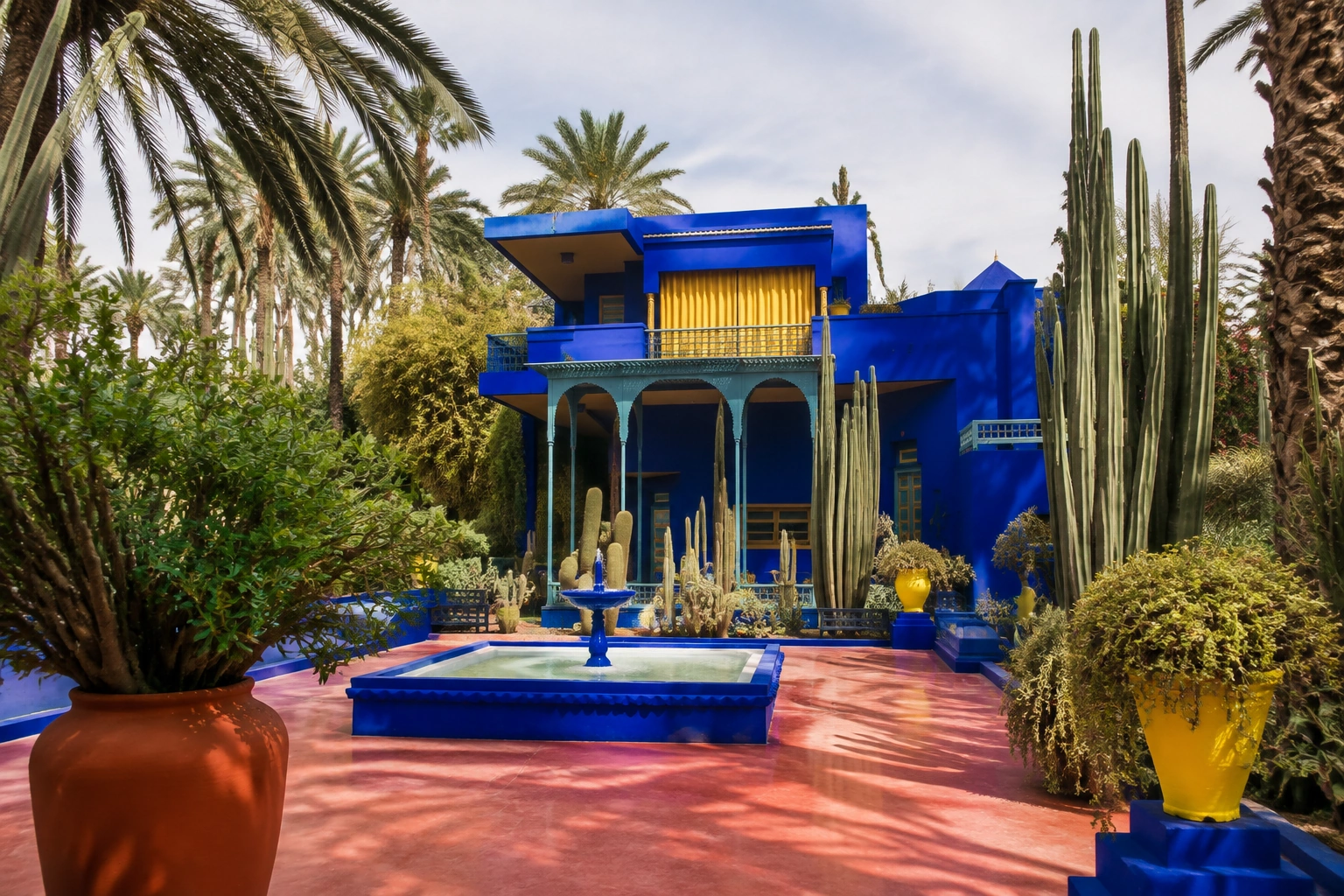
Majorelle and Menara photos begin with different decisions about space. At Jardin Majorelle, a small area of blue wall or a group of plants can carry the setting of a close portrait. At Menara, the pavilion and water invite you to step back visually and give the surroundings a larger role. You can enjoy either without collecting the same poses at both.
Choose the garden for the visit as well as the photograph. Someone who wants to look closely at planting may have a different priority from someone who wants an expansive scene. Agree on that purpose before planning the connection, and give any entry arrangements their own place in the day.
Sort out the visit before choosing a camera position
Begin with Jardin Majorelle’s official website for current ticket information. It directs visitors to its own online ticket platform. Read the selection carefully so you understand the garden or museum it covers, and keep the arrival details accessible. A photograph saved from another traveler does not tell you which admission they held or what was open during their visit.
Menara is a separate destination with its own visitor arrangements. Use the tourism council’s Menara page as a starting reference and confirm details relevant to your plans. A garden visit, pavilion access, and an organized photo session should not be treated as interchangeable. The app supplies none of those arrangements.
Decide how much of the day you want to give each place before linking them on a map. You may prefer one garden and a slower lunch to two short visits. Leave room for transport, entry, and a break without promising yourself that a particular portrait will take only a few minutes. The useful schedule is the one your group can enjoy even if the photograph changes.
Let one colour carry the Majorelle portrait
At Jardin Majorelle, start with a single background decision: a blue surface, a shaded planting area, or a small arrangement of shapes. Keep enough context to identify the garden without placing every pot and leaf behind a face. Look at the edges of the frame for anything that seems to grow out of the person’s head.
Make one photograph with the garden taking up most of the image. Then move the camera closer to the person, or choose a tighter crop from a permitted position. Compare the two: the first explains the setting, while the second can preserve an expression. Neither needs to contain every part of the blue architecture to succeed.
If a companion helps, show them the frame you want and name one thing to retain, such as a band of blue beside the shoulder. Take a short set, check the expression, and let other visitors pass. Staying on the path may limit an angle, but it also gives you a useful constraint: solve the photograph with framing instead of stepping into a planted bed.
Give Menara’s pavilion and water some space
Menara Gardens offer a different starting point. The tourism council describes the basin and the pavilion with its green tiled roof; the national tourism office also identifies the olive groves. Try a wider photograph that shows how these elements sit together, rather than immediately filling the image with a person.
For a portrait, decide whether the pavilion or a quieter part of the garden should identify the place. If the pavilion matters, keep its roofline separate from the head and shoulders. If a closer expression matters more, use a smaller section of background and save the wider view as a separate photograph. A companion can hold the camera still while you compare one or two positions.
Treat a reflection as something to observe, not something to demand. Ripples, light, and your permitted position may change what you can see. If the water does not mirror the pavilion clearly, make the roofline or the open space the main element instead. Stay behind barriers and away from the water’s edge wherever access is restricted; the composition can adapt to the place.
Review colour and scale before taking another set
Strong colour and broad scenery create different distractions on a phone screen. At Majorelle, check whether the brightest patch of wall pulls all the attention away from the face. At Menara, check whether the person has become too small to recognize. These are specific problems you can address with a different crop, instead of repeating the same picture and hoping it improves.
Look at a face before judging the sky. If your camera struggles to show both clearly, choose which matters in this frame and keep the other subject for the next photograph. You can also wait for a natural pause in your group’s movement. Someone looking at a plant or across the water may give you a more personal image than another carefully placed pose.
Set a small limit on the review itself. Keep one scene image, one portrait, and perhaps one detail that caught your attention without prompting. Then spend some time walking with the camera put away. The difference between a pleasant garden visit and an exhausting session can be the decision that the pictures you already have are enough.
Unlock the place during the visit, create later
The two gardens have different entries in the Marrakech collection. Open the correct Landmark in Unlocked, choose Unlock inside its supported area, and confirm that the current location check succeeds. A nearby museum, another garden, or a photograph from a previous trip cannot substitute for that check. If access prevents reaching the supported area, respect the restriction and return when a permitted visit is possible.
After unlocking, Jardin Majorelle offers Majorelle Blue, Bamboo Calm, and Cactus Editorial. Menara offers Pavilion Reflections, Olive Grove Light, and Menara Golden Hour. These names describe generated creative directions. They do not reserve a physical backdrop or require arrival in the light shown by the illustration. Your unlock remains available so you can choose reference photos and create a private Memory later.
Keep your camera photographs for the conditions and moments you encountered. A generated Memory offers a personal interpretation of that verified visit, clearly identified as generated when shared. If your next outing focuses on architecture and the square, use the Marrakech medina photo guide to choose a different pace and subject.
Useful details
Frequently asked questions
Should I plan Majorelle and Menara as one walking route?
Treat them as separate visits and decide the connection using a current map, your bookings, and your group’s needs. This guide compares photo choices; it does not supply a timed or tested walking itinerary.
Where should I check Jardin Majorelle tickets?
Start from the official Jardin Majorelle website and follow its ticket link. Check exactly which garden or museum your selection covers; an Unlocked Experience includes no admission, reservation, or private photo session.
Do Menara Experience names guarantee reflections or golden light?
No. Pavilion Reflections and Menara Golden Hour describe generated creative treatments. Actual light, water, visibility, and visitor access depend on the day, and you should make your camera photographs around those conditions.
Source notes
Sources
This article was prepared with editorial automation using the source pack below.
- Marrakech Landmarks and ExperiencesUnlocked
- Jardin Majorelle official visitor and ticket informationJardin Majorelle
- Menara Gardens and pavilionMarrakech-Safi Regional Tourism Council
- Marrakech and the Menara olive grovesMoroccan National Tourist Office