Barcelona rewards the traveler who changes pace. Its best-known architecture is monumental, but the city is understood in smaller transitions: hill to sea, ordered grid to medieval lane, hard midday shadow to amber evening.
The seven Barcelona Landmarks in Unlocked are not a completion checklist. They are seven different ways into the same city.
Park Güell: begin above the grid
Park Güell makes a useful first chapter because Barcelona is visible from it as a whole. The city’s strict blocks run toward the Mediterranean while Gaudí’s surfaces refuse almost every straight line.
Plan around your ticketed entry and adapt your photographs to the light and visitor conditions you find. The monumental zone deserves attention, but so do the stone viaducts and the shift between designed landscape and scrubby hillside.
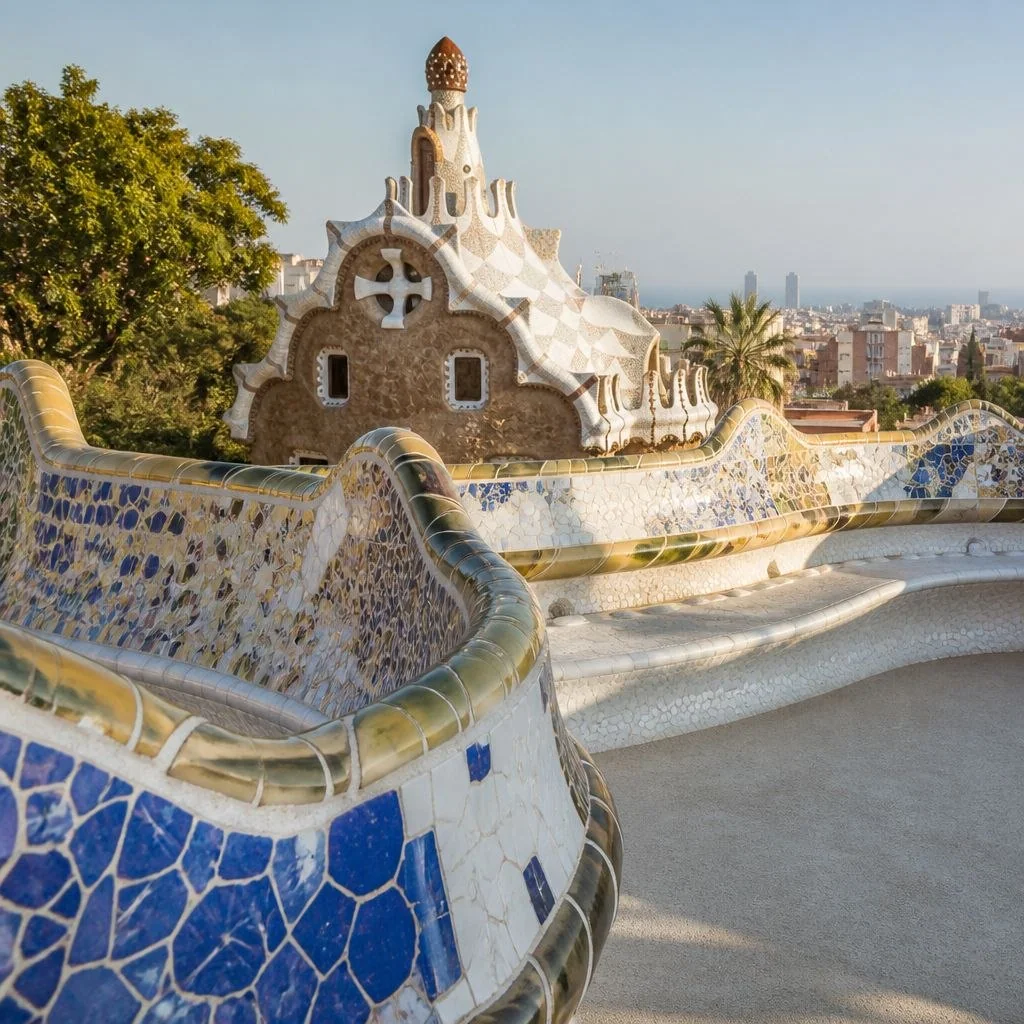
Explore the Park Güell photo ideas and Experiences and the guide to crowded terrace photos.
Sagrada Família: watch the light move
The exterior announces scale. The interior explains the building. Coloured light changes the columns and floor by the hour, so this is a place where timing matters more than a perfect camera position.
If you can, leave enough room in the day to walk one full circuit outside. The Nativity and Passion façades speak in radically different registers.
See the Sagrada Família photo ideas and Experiences before choosing what to keep from your visit.
Casa Batlló: read the block, not just the building
Casa Batlló sits on the Passeig de Gràcia among other statements of Catalan modernisme. Looking at the whole block makes its choices clearer: bone-like balconies, a restless roofline, and a façade that seems almost liquid beside its neighbours.
This is a useful place to slow down after dark, when artificial light changes the surface again.
Explore the Casa Batlló photo ideas and Experiences, or plan how to get in the frame with our solo travel photo guide.
Arc de Triomf: follow the promenade
Barcelona’s Arc de Triomf is not an isolated monument. It is the threshold to a long, social promenade leading toward Parc de la Ciutadella.
Use it as a walking Landmark. The approach, palms, cyclists, musicians, and red brick all matter more than standing at its exact centre.
Barceloneta: arrive with the morning
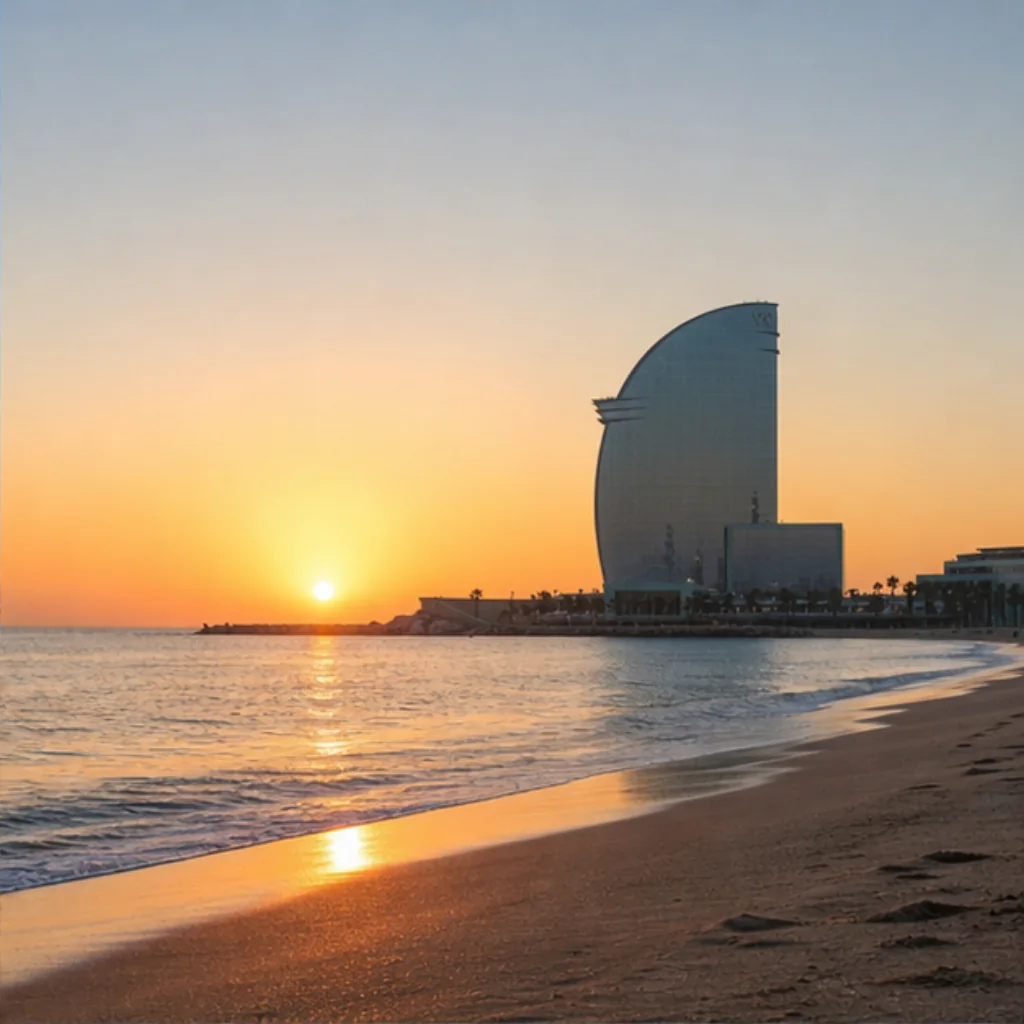
The beach is one version of Barceloneta. The narrow residential streets behind it are another. Early morning lets both coexist before the waterfront becomes a stage.
Montjuïc: take the long view
Montjuïc changes the scale again. Gardens, museums, fortified walls, and overlooks spread the visit out. Do not treat it as one pin on a map; choose a route and let the hill become the experience.
The reward is orientation. From above, the port, old city, and Eixample settle into relation.
Gothic Quarter: allow yourself to be briefly lost
The Gothic Quarter works against efficient navigation. Lanes narrow, small squares appear without warning, and the city’s layers sit visibly on top of one another.
Keep a destination, but loosen the route. A good walk here alternates between enclosed streets and sudden open space.
A route for different kinds of light
You do not need to visit all seven in a single trip, and certainly not in one day. If you want a loose rhythm, use the city’s light as the itinerary.
| Time | Landmark | What to notice |
|---|---|---|
| First light | Barceloneta | Quiet waterfront and working streets |
| Morning | Park Güell | Cooler paths and a clear city view |
| Midday | Sagrada Família | Coloured interior light |
| Afternoon | Gothic Quarter | Contrast between lanes and squares |
| Late day | Montjuïc | The city and port in relation |
| Blue hour | Arc de Triomf | The promenade becoming social space |
| Evening | Casa Batlló | The façade under artificial light |
Unlocked can mark that you made it to each place. What happens between the pins is still the trip.