Bali spreads its photo spots across a whole island: sea temples on cliffs, a lake temple in the mist, and green terraces in the hills. This guide covers each supported Landmark with composition advice and the practical details — tides, dress, timing — that make the photos worth keeping.
Ubud, the coast, and the southern cliffs are different day trips. Give each cluster its own day, start early, and you will photograph the temples before the tour buses arrive.
02
Respect the temple dress rules
Every temple asks for a sarong and sash, usually provided at the gate. Shoulders covered, respectful distance from ceremonies — and the sarong often improves the photo.
03
Time the tide and the sunset
Tanah Lot is a sunset spot and a tidal island, so check both. Uluwatu pairs its cliff walk with the evening Kecak dance. The terraces are best in soft morning light.
The collection
7 photo spots in Bali.
The Bali Landmarks with dedicated guides, each with the composition advice from its full page. Visit in person to unlock its badge in your free Passport.
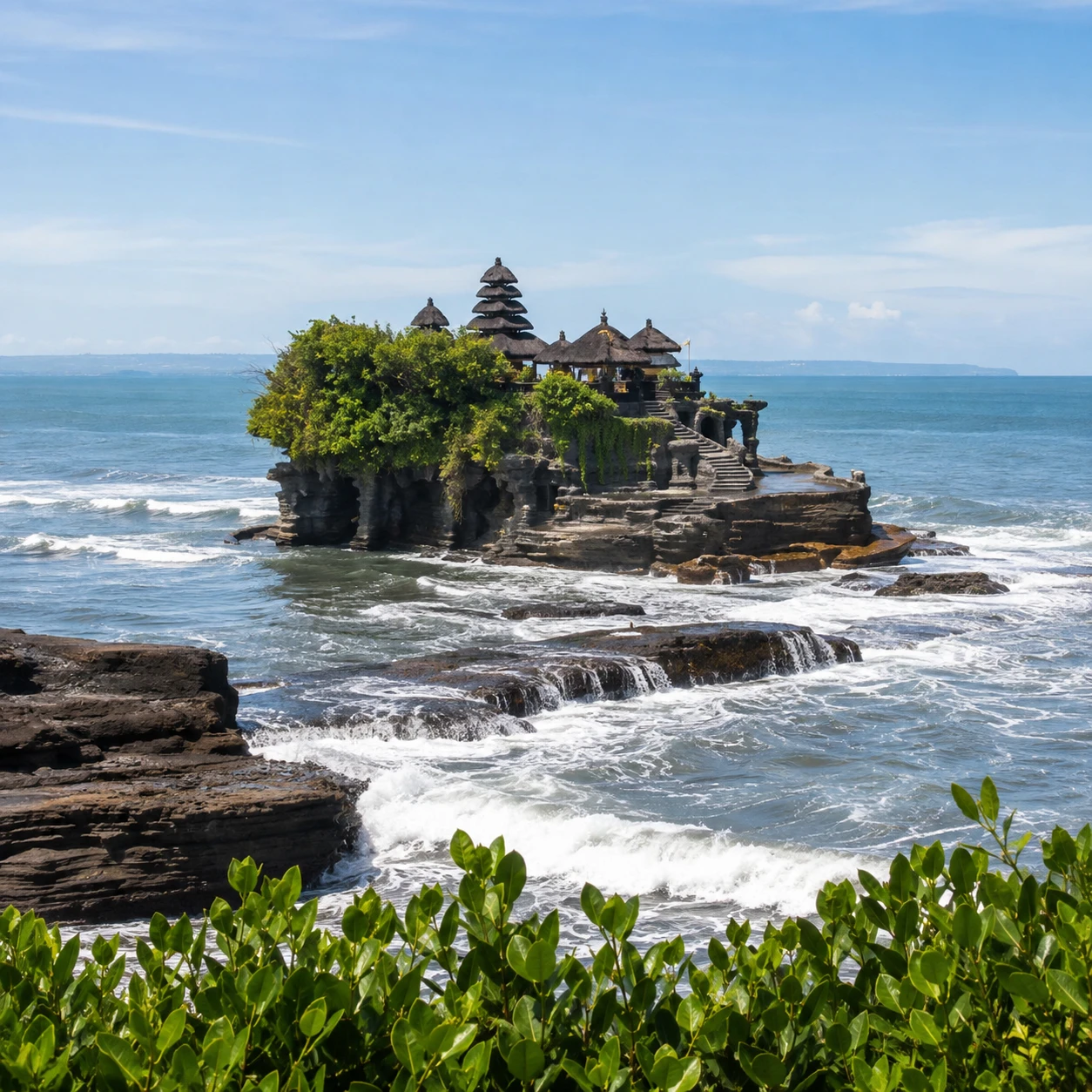
The sea temple gives the photograph an outline; the ocean gives it space. Choose a visitor viewpoint that lets you enjoy both, then make a closer portrait without trying to reach the temple rock.
For the scene photograph, leave space around the rocky outcrop and decide how much ocean to include. For a portrait, bring the person closer while retaining the temple’s recognizable outline.
Follow staff directions and barriers for the conditions on your visit. Do not assume that a photograph showing dry rock or a clear approach establishes a safe or permitted crossing now.
If the sky is bright, choose whether you want a readable face or a silhouette and take each as a separate picture. A sunset-inspired Memory can be created after a verified visit at another time.
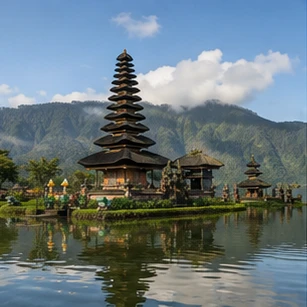
Tiered roofs, lake water, and the highland background give this visit a different scale from Bali’s coast. Start with their relationship, then decide how much of it your portrait needs.
Choose a permitted visitor position and make one frame with space around the tiered roofs. For the portrait, simplify the background so a face does not disappear against the architecture.
If reflections are visible, include them deliberately. If wind, water level, or the available viewpoint changes the scene, work with the roof shapes and background instead of waiting for a reference picture to become real.
Give this highland stop its own transport and access plan. Bali is an island collection, and visiting one temple does not place you near every other supported Landmark.
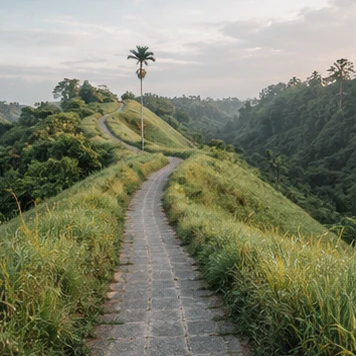
A path through greenery gives a portrait a sense of movement without a complicated pose. Keep the walk comfortable, make a small set of pictures, and leave time to notice the valley around you.
Decide your turnaround and return route before starting. Use current local directions and conditions to judge the walk for your group; a paved path does not describe every approach or access need.
Choose a short section where the path is visible behind the person, take a few natural steps forward, and pause to check the picture. Let others pass instead of repeating the walk across their route.
Stay on permitted paths and protect the vegetation at the edge. If the light is harsh or the weather changes, shorten the photo stop and keep the return journey in mind.
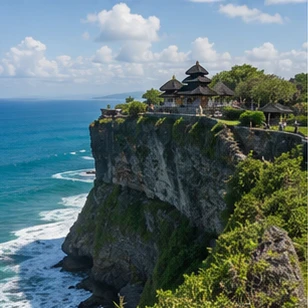
Uluwatu is all edges: a limestone cliff, a temple perched on top of it, and the Indian Ocean working the scene below. The cliff does the composing; you bring the patience.
Stay on the marked cliff paths—the temple’s terraces and the viewing walkways give you the drop, the waves, and the temple all in one honest frame.
The temple’s macaques are professional opportunists. Secure glasses, hats, and phones before you raise them, and never hand food or an object toward a monkey.
Sarongs are required on temple ground and are available at the entrance; the evening Kecak dance fills the amphitheater, so arrive early if photographs matter.
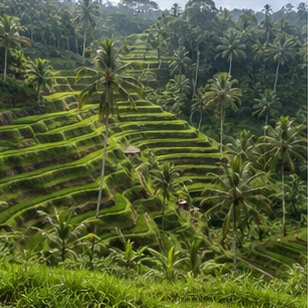
The terraces are living geometry: curved paddies stepping down the valley, palms standing at the corners, and morning mist settling the layers into place.
The roadside terraces are the famous view, but the walking paths a few minutes in give you the same curves with fewer people in them.
The terraces are working farmland. Walk the marked paths, pay the small farmer donations where posted, and never step onto the paddy walls for an angle.
Early morning brings soft light, mist, and empty paths; by mid-morning the swing operators and photo decks arrive too.
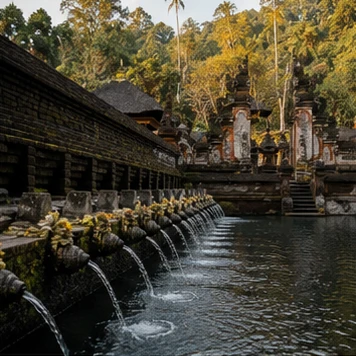
Tirta Empul is Bali at its most serene: spring water moving through carved stone channels, offerings on every ledge, and a hush that settles over the courtyards.
The courtyards face east and the light arrives gently; midday glare flattens the stone, so morning and late afternoon flatter both temple and portrait.
This is an active temple of purification. Observe quietly from the side, dress in the required sarong, and never step into the pools or block worshippers for a frame.
Cameras are welcome in the outer courtyards; follow the posted restrictions near the springs and leave large bags behind.
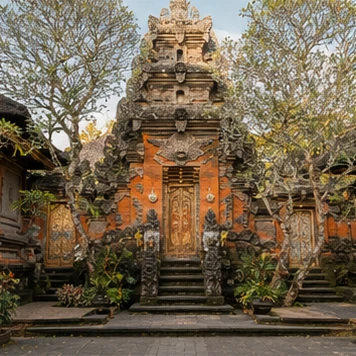
Puri Saren Agung sits on Ubud’s busiest corner and keeps its own quiet: carved gateways, lotus ponds, and red-brick courtyards a minute’s walk from the market crowd.
The main carved gateway is the signature frame; stand back across the street for the full portal, or catch its reflection in the lotus pond at the right hour.
The palace fronts the town’s busiest junction—keep to the sidewalk for street-side shots, and mind the flow of scooters when stepping back for a wide frame.
Evening dance performances use the courtyard on their own schedule; a performance ticket is never part of the unlock or an Experience.
Illustrative catalog artwork. The visit is yours to make.
Plan the day
Bali photo spot questions.
Are all of these Bali photo spots free to visit?+
The temples charge small entrance fees that usually include the required sarong, and the Campuhan Ridge Walk is free. Ticket prices are modest but real, so bring cash. Unlocked’s Landmark unlock is always free and separate from temple admission.
How many days do I need for the full collection?+
Three to four relaxed days from a Ubud base: one for the southern cliffs, one or two for the Ubud cluster, and one long day for Tanah Lot and the coast. Each visit unlocks its Landmark in Unlocked for free, on its own schedule.
What should I wear for temple photos in Bali?+
A sarong and sash are required inside temple grounds and are typically available at the entrance. Beyond the requirement, solid colors photograph beautifully against the stone and green — and bring a strap for your phone or camera on the cliff walks.