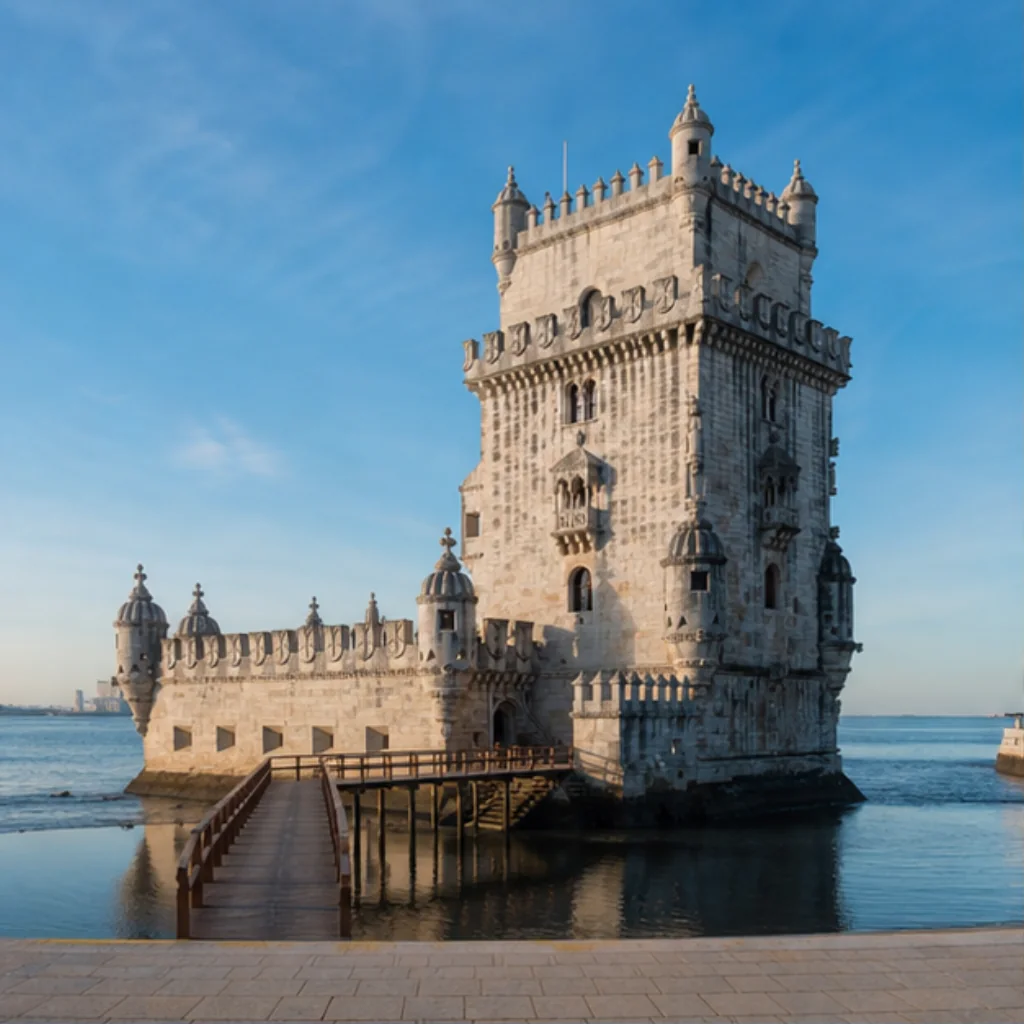
Belém Tower photos can concentrate so closely on the monument that they lose the reason its setting feels distinctive: a stone structure beside a broad stretch of water. Before deciding where someone should stand, decide what relationship you want the picture to show. A wide waterfront photograph and a closer portrait can tell that story together.
This guide is for planning a visit you can enjoy, with a small set of useful photographs. It does not promise a particular angle will be accessible, a quiet time of day, or weather matching the artwork on this page. Check the official visitor information, choose your priorities, and leave enough flexibility to change the plan when you arrive.
Separate the waterfront stop from the interior visit
Ask whether you want time beside the river, a visit inside the tower, or both. These choices need different amounts of attention. A waterfront portrait does not itself require touring the monument. If you do want to go inside, make that booking an explicit part of the day instead of assuming it can be added after the photographs.
The monument’s 2026 reopening notice introduced timed visits. Use the current official visitor page for the arrangements that apply to your date, including access and weather-related closures. Old opening-time summaries and an attractive reference image are poor substitutes for that check.
Plan your journey to Belém and the return independently of the photographic idea. Leave a margin around any booking rather than filling it with a sequence of exact photo stops. If an interior visit is the main reason you came, protect time for it. If the river is the priority, allow yourself to enjoy that without treating a ticketed visit as something you must complete for the outing to count.
Give the tower and the river different amounts of space
Start by making one photograph without anyone posing. Look at where the water, skyline, and tower meet the edges of the picture. A wider frame can explain the waterfront setting. A tighter frame can emphasize the tower’s silhouette or stonework. Compare the two before asking someone else to wait in position.
Then introduce the person as a separate decision. If their expression matters, bring them closer to the camera and allow part of the monument to sit outside the frame. Keep enough architecture to identify the place. This often produces a more personal photograph than trying to hold the entire tower and a distant person at the same scale.
Watch the background around the head and shoulders. Move the framing slightly when a strong vertical edge appears to grow out of someone’s head. Work from permitted pedestrian space and use only positions that are comfortable and accessible on the day. Your camera position does not have to match another photographer’s for the image to be worth keeping.
Keep a solo portrait request easy to follow
When traveling alone, prepare the shot before deciding whether to ask another visitor for help. Set the lens you want and frame the background. Show that composition, explain where you will stand, and make one short request: “Please keep the tower to this side and leave some river visible.” The helper can then concentrate on holding the frame.
Ask for a small number of pictures. Check whether your face is clear and the important background has room, thank the person, and move on. You can make a minor crop later. A brief favor does not need to turn into a full portrait session with multiple locations and repeated direction.
If you would prefer to keep your phone with you, a handheld self-portrait or a photograph of the place alone is still a record. You can also take a small detail that interested you, such as a relationship between stone and water. The outing has value even if the personal photograph is less polished than the one you imagined.
Work with the conditions you find
Water, sky, and pale stone can create a picture with a large difference between bright and shaded areas. Look at the face on the screen before taking several identical shots. A simpler background or a closer composition may help more than repeatedly asking the person to change their expression. Keep one frame that explains the overall scene even if it is not your favorite portrait.
If wind makes conversation difficult or everyone is uncomfortable, shorten the photo stop. If access is restricted, choose a different permitted position or leave it for another visit. Waiting longer does not necessarily improve a picture when the obstacle is a closure rather than a passing cloud.
Decide what would make another attempt worthwhile. You might be waiting for someone to finish crossing a small part of the frame, which is a specific change. Waiting for the entire setting to become empty is a much less useful plan. Once you have a photograph that recalls being there, spend the rest of the stop looking at the river without needing it to become a backdrop.
Create a separate interpretation after the visit
The Torre de Belém Landmark in Unlocked offers River Fortress, Explorer Dawn, and Manueline Editorial. To access those Experiences, open the Landmark and complete Unlock while physically in its supported area. Confirm it succeeds before leaving. A photo taken from somewhere nearby or remembered after the trip cannot replace that check.
Once unlocked, you can choose your reference photos and create a private Memory later. The Experience is a generated creative direction, so Explorer Dawn does not require arriving at dawn and River Fortress does not include monument admission. If restrictions prevent reaching the supported area, respect them and return another time; the app provides no alternative access permission.
Keep your own photographs for the actual scene and describe the Memory as generated when sharing. The Lisbon collection contains the other supported Landmarks. For an outing with a different change of scale, see the guide to Praça do Comércio and castle photos, where a riverfront square and a hilltop view call for separate compositions.
Useful details
Frequently asked questions
Does this guide require going inside Belém Tower?
No. The main suggestions concern exterior waterfront photographs. An interior visit is a separate choice requiring current admission arrangements, and access can change with weather or other conditions.
Do I have to arrive at dawn for Explorer Dawn?
No. Explorer Dawn describes a generated creative scene in Unlocked. Verify a real visit first, then choose an available Experience; its name does not grant early access or set an arrival requirement.
What if I cannot reach the supported unlock area?
Respect any closure or barrier and do not attempt to bypass it. A nearby photograph cannot replace the location check. You can return to complete the unlock when access allows.
Source notes
Sources
This article was prepared with editorial automation using the source pack below.
- Lisbon Landmarks and ExperiencesUnlocked
- Monument visitor informationMosteiro dos Jerónimos e Torre de Belém
- 2026 reopening and timed-visit noticeMosteiro dos Jerónimos e Torre de Belém