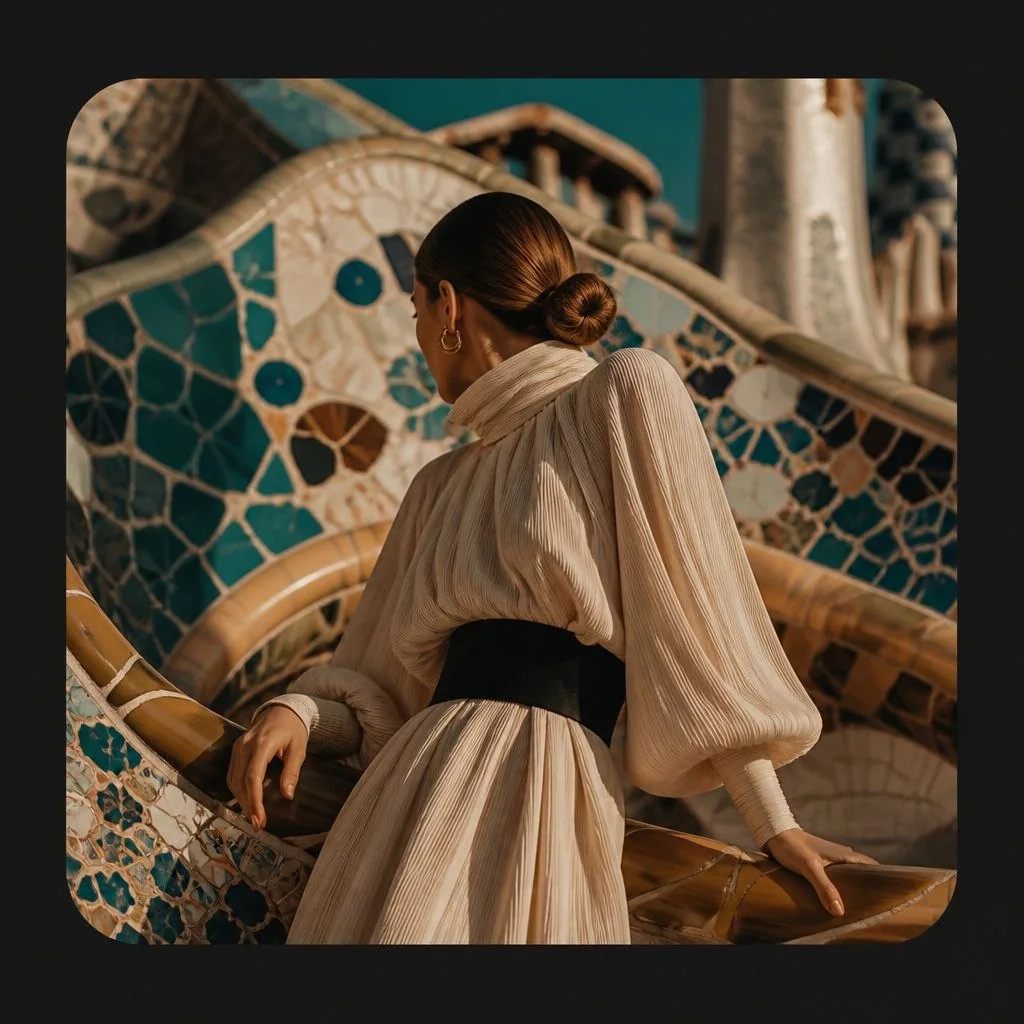
An AI travel portrait app should do more than put a landmark behind a face. The useful question is what connects the image to a visit. A credible product should make the place, creative direction, reference-photo handling, and long-term result understandable before it asks a traveler to create anything.
That definition creates a practical boundary. A generic image tool can produce a travel-looking scene from a text request, even when no trip happened. A travel portrait product can choose a narrower job: connect a personal image to a specific place and preserve the result as part of the traveler’s own record. The generated image is still a creative artifact, not documentary evidence.
An AI travel portrait app should begin with the place
Place is more than scenery. It gives the portrait a reason to exist and gives the traveler a way to understand why this particular creative option is available.
Unlocked uses a place-led sequence: Physical presence → Landmark Unlock → Curated Experience → Memory → My World. A supported Landmark has to be reached before its Experiences become available. Once an Experience is unlocked, the traveler can return to it later. Creation does not have to compete with the actual visit.
This separation matters. A traveler can pay attention to the place first, preserve the Unlock, and decide at home whether a Memory belongs with it. The result does not claim to replace an original photograph or reconstruct every detail of a moment. It is a deliberately generated interpretation attached to a visit record.
When evaluating any app in this category, ask four concrete questions:
- What makes the place relevant to the image?
- Does the app distinguish a visit record from generated content?
- Can the creative step happen later, or must it interrupt the trip?
- Is the supported place list clear before the traveler depends on it?
Unlocked currently defines supported Landmarks across Barcelona, Lisbon, Montreal, and Paris. Defined coverage is more useful than vague claims of working everywhere, because a place-earned product only works where its catalog and verification flow exist.
Curation changes the decision a traveler has to make
An open image prompt asks the user to describe a scene, style, camera language, composition, and desired mood. That freedom can be useful, but it also makes the traveler responsible for art direction and for understanding which instructions will produce a coherent result.
A curated Experience makes a different tradeoff. The product prepares a small set of legible photographic directions for a Landmark, and the traveler chooses among them. In Unlocked, those choices use consumer-facing names and previews rather than exposing the underlying visual instructions. The experience is designed around choosing a direction, not learning how to operate an image system.
Neither model is universally better. Open prompts maximize instruction freedom. Curated Experiences reduce decision work and can keep the result tied to a place-specific editorial idea. The important question is whether the product makes that tradeoff visible instead of promising effortless control over an unpredictable process.
Useful evaluation questions include:
- Can I understand the creative direction before using a credit?
- Is the choice connected to the Landmark, or is the place only decoration?
- Does the app identify the output as generated?
- Does it avoid promising an exact likeness or guaranteed result?
Clear boundaries are part of the product. They help the traveler decide whether the creative result fits the way they want to remember the trip.
Reference photos should have one narrow, explained purpose
A personalized portrait needs a traveler-approved reference image. That does not give an app a blank cheque to collect an entire photo library, publish uploads, or reuse them for unrelated marketing.
Before uploading, the traveler should know why the image is needed, where it will be stored, when another service may process it, how access works, and how removal works. These are separate questions from whether the final image looks good.
Unlocked treats reference photos as sensitive private user content. Its Privacy Policy describes private storage, short-lived signed access links, and controls for removing references or deleting an account. It also states that Unlocked does not publish a public reference-photo gallery, sell reference photos, perform facial recognition, compare identities, or create biometric embeddings.
Those are specific product boundaries, not a universal guarantee about every AI travel photo service. Travelers should review the current policy of any app they use and upload only an image they have the right to provide. If another person appears in a reference, their permission matters too.
Privacy includes the generated Memory, not only the input
An app can keep an upload private and still make the finished result public by default. That is why privacy review needs to follow the entire path: input, processing, output, access, and deletion.
Unlocked stores generated Memories privately and displays them through authenticated, time-limited access rather than permanent public object addresses. My World is designed as a personal travel passport with a map, city progress, Unlock dates, and Memories. It is not a public feed or leaderboard.
This creates a quieter product model. The value can remain with the traveler even if they never post the result. Sharing, if offered, should be a deliberate action rather than the price of keeping a Memory.
A useful privacy check therefore asks:
- Are reference images private by default?
- Are generated results private by default?
- Does the app explain any external processing?
- Can the traveler remove one input, all inputs, or the account?
- Does marketing use require separate permission?
Privacy is not the claim that no system ever processes the image. It is a set of understandable boundaries around why processing happens, who can reach the content, and what control the traveler retains.
Permanence should belong to the traveler’s record
The most durable part of an AI travel portrait app is not the novelty of generation. It is the relationship between a place, the date it became part of the traveler’s history, the Experience that was earned, and the Memory the traveler chose to keep.
Unlocked keeps an earned Experience available after the visit while the service and account remain active. That allows the creative decision to happen on the traveler’s time. My World then organizes the resulting place record and Memory without adding points, public rankings, or daily posting pressure.
This is a narrower promise than “turn any trip into perfect photos.” It does not claim that a generated result documents what the street, weather, clothing, or crowd actually looked like. It creates a labeled creative keepsake connected to a separate presence-based Unlock.
That distinction is worth preserving. A visit can be real, an original photograph can be imperfect or absent, and a later Memory can still be meaningful without pretending to be an untouched record.
Use four tests before choosing an app
An AI travel portrait app is easiest to evaluate through four tests:
- Place: Is there a clear relationship between the result and a real destination or visit?
- Curation: Can the traveler understand and choose the creative direction without hidden promises?
- Control: Are reference photos, generated results, access, and deletion explained in concrete terms?
- Continuity: Does the result become part of a durable personal record, or is it only a one-time generation?
Unlocked is one opinionated implementation of those choices. It starts with supported Landmarks, makes a verified Unlock the gate to curated Experiences, keeps reference photos and Memories private, and places the result in My World. It does not need to be the only definition of the category for those boundaries to be useful.
Review the Unlocked product overview and its current privacy terms, then compare the four tests with the kind of travel record you actually want to keep.
Useful details
Frequently asked questions
What is an AI travel portrait app?
It is an app that uses a traveler-approved reference image and a creative travel setting to produce a personal, generated portrait or Memory. A credible product should explain the connection to the place, the creative boundaries, how personal photos are handled, and whether the result remains private.
Does an AI travel portrait prove that someone visited a place?
The image alone does not prove a visit. Any visit claim depends on the product's separate presence record and verification method. Generated content should be identified as generated, while the visit record and the creative result should remain distinct parts of the experience.
What should I check before uploading a reference photo?
Check why the image is needed, whether storage is private, whether access links expire, whether the app publishes or sells reference images, and how individual photos or the whole account can be deleted. Review the current privacy policy before granting access.
Source notes
Sources
This article was prepared with editorial automation using the source pack below.
- Unlocked product overviewUnlocked
- Unlocked Privacy PolicyUnlocked